
semiepiphyte
- noun
- /ˌsɛmɪˈɛpɪˌfaɪt/
- Specialized
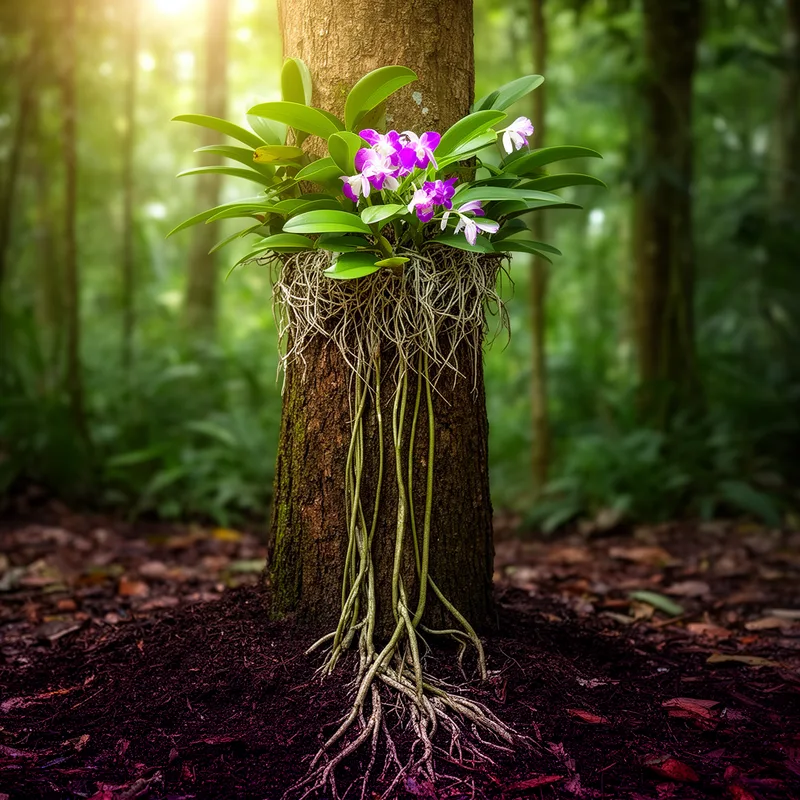
- Many tropical orchids are considered semiepiphytes because they start life on trees but later root in the ground.
Examples
-
Some semiepiphytes rely on both aerial and soil roots during their growth stages.
-
Researchers found that semiepiphyte populations thrive in areas where both trees and soil are abundant.
-
The semiepiphyte thrives in both soil and trees.
-
Many semiepiphytes can adapt to different environments.
-
Many tropical orchids are considered semiepiphytes because they start life on trees but later root in the ground.
-
Researchers found that semiepiphyte populations thrive in areas where both trees and soil are abundant.
-
Some semiepiphytes rely on both aerial and soil roots during their growth stages.
Synonyms

A plant that grows on another plant and later sends roots to the ground
How Epiphytic


Surface Forms
Morphology
semiepiphyte = epiphyte (transparent) = semi + epi + phyte
The word is transparently formed by adding semi- meaning 'partly' to epiphyte.
Etymology
Semiepiphyte joins semi- ('half') with epiphyte, where epi- means 'on' and -phyte means 'plant'. So a semiepiphyte is a 'half-on-plant', a plant that lives on trees for part of its life and is rooted in the ground at another time.