

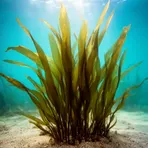
sea tang
- noun
- UK
- After the storm, heaps of sea tang lined the shoreline.
Examples
-
At low tide, children collected sea tang from the rocks to use in their garden.
-
The slippery sea tang clung to our feet as we waded through the shallow water.
-
Look at that large sea tang over there!
-
The sea tang washed up on the shore.
-
After the storm, heaps of sea tang lined the shoreline.
-
At low tide, children collected sea tang from the rocks to use in their garden.
-
The slippery sea tang clung to our feet as we waded through the shallow water.
Synonyms
 41
1.0
41
1.0

A plant that grows in the sea, often in long green or brown sheets
 19
4.9
19
4.9
Large brown seaweed with long strong leaves that forms underwater forests near the coast
 1
9.1
1
9.1
A brown seaweed that grows on rocky coasts and is used as fertilizer or food


 1
9.0
1
9.0
A rough brown seaweed that grows on rocks at low tide
 1
9.9
1
9.9
Seaweed and other water plants washed up on the shore

A large brown seaweed that grows in cold water near the coast

Dead seaweed and other sea plants washed up on the shore

A brown seaweed with jagged edges that grows on rocky seashores in the North Atlantic

A brown seaweed with saw-toothed edges that grows on rocky seashores

A brown seaweed that grows in warm coastal waters

A brown seaweed with round air sacs that floats in large patches in warm Atlantic waters
Surface Forms
Morphology
Both constituents are literal and compositional: 'tang' denotes a coarse seaweed and 'sea' simply specifies its marine habitat, so the compound denotes a type of seaweed. This follows a common noun + modifier pattern (like 'seaweed' or 'sea grass') and is directly derivable by a B1 learner who knows the constituent meanings.
Etymology
Sea tang comes from an old word tang, which meant a long strip of seaweed that clung to rocks and boats. So sea + tang gives a clear picture of the thick 'seaweed' you find along the shore.