

rockweed


 1
9.0
1
9.0
- noun
- /ˈrɑkˌwid/
- When exploring the coastline, I noticed the rockweed clinging to the wet rocks at low tide.
Examples
-
Even after the apparent recovery of rockweed, previously oiled shores experienced another round of mass rockweed mortality, most likely because the entire stand was of the same age.
Academic text (2008) -
Even after the apparent recovery of rockweed, previously oiled shores experienced another round of mass rockweed mortality, most likely because the entire stand was of the same age.
Academic text (2008) -
There was only one way to cook lobsters: steamed in rockweed.
Fiction book (1999) -
"But the tide's flooding in, and if you don't move fast, you'll never get that rockweed." "Come with us, George," Snow said, pulling his hand.
Fiction book (1999) -
Lobsters and crabs scuttled beneath the rockweed.
Fiction book (1999) -
Mike waded into the tidal pool, filling a bushel basket with rockweed.
Fiction book (1999) -
The absence of rockweed also inhibited the recruitment of more rockweed because juveniles of this species preferentially settle under the protective shield of adult plants.
Academic text (2008) -
The absence of rockweed also inhibited the recruitment of more rockweed because juveniles of this species preferentially settle under the protective shield of adult plants.
Academic text (2008) -
If a vacant space on top of a crab's shell receives enough sunlight through the shallow water, then green sea lettuce, brown popweed, and red rockweed often move in.
Academic text (2002) -
Through this method, researchers can get a sense of just about every species in the intertidal zone—that area between high and low tide that's home to sea anemones and sea stars, hermit crabs, and rockweed.
Blog text (6)
Synonyms
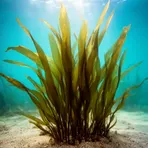 41
1.0
41
1.0
A plant that grows in the sea, often in long green or brown sheets
 19
4.9
19
4.9
Large brown seaweed with long strong leaves that forms underwater forests near the coast
 1
9.9
1
9.9
Seaweed and other water plants washed up on the shore

A brown seaweed with saw-toothed edges that grows on rocky seashores
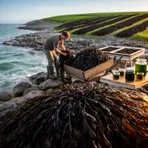
A dark seaweed that grows on rocks and is used as a fertilizer and in kelp products
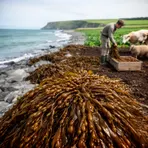
A large brown seaweed that grows on North Atlantic coasts and is used as plant food and feed for animals

A rough seaweed that grows on seashores and is often large and leathery

Dead seaweed and other sea plants washed up on the shore
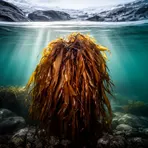
A large brown seaweed that grows in cold water near the coast
Compounds
A dark seaweed that grows on rocks and is used as a fertilizer and in kelp products
Surface Forms
Morphology
Etymology
The word rockweed is simply the two words rock and weed, meaning a 'plant' that grows on rocks. That's why it names a coarse brown seaweed that clings to rocks at low tide.