

sea lamprey


 1
7.5
1
7.5
- noun
- /siː ˈlæmpri/
- Specialized
 :
lamprea de mar
:
lamprea de mar
- Invasive species like the sea lamprey can have devastating impacts on local ecosystems and biodiversity.
- female sea lamprey
- parasitic sea lamprey
- male sea lamprey
Examples
-
The sea lamprey, a parasitic fish, has had a catastrophic impact on native lake trout populations, resulting in millions of dollars in damages and losses to commercial fisheries.
Academic text (1994) -
The sea lamprey is a parasitic fish that attaches to larger fish and feeds on their blood.
-
Biologists are studying how the invasive sea lamprey affects the populations of native fish in the Great Lakes.
Synonyms
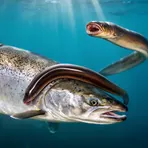 9
9.0
9
9.0
A thin eel-like fish with no jaws that attaches to other fish to feed

A large eel-like fish that moves from sea into rivers to attach to and feed on other fish, sometimes eaten

A jawless eel-like fish that sticks to other fish using a round sucking mouth
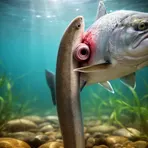
A long fish without jaws with a round mouth that sucks blood from fish in rivers or seas
Surface Forms
Morphology
The meaning 'a lamprey that lives in the sea' is directly derivable from combining 'sea' (saltwater body) with 'lamprey' (a primitive fish). This noun–noun compositional pattern is straightforward and cross-linguistically common, so a B1 learner who knows both constituents should understand the MWE.
Etymology
Sea lamprey The name lamprey may come from an old word meaning 'stone-licker', a picture that helps us imagine its long body and round, sucking mouth. The fish uses that round mouth to attach to and suck the blood of other fish, so the name fits a parasitic fish.