
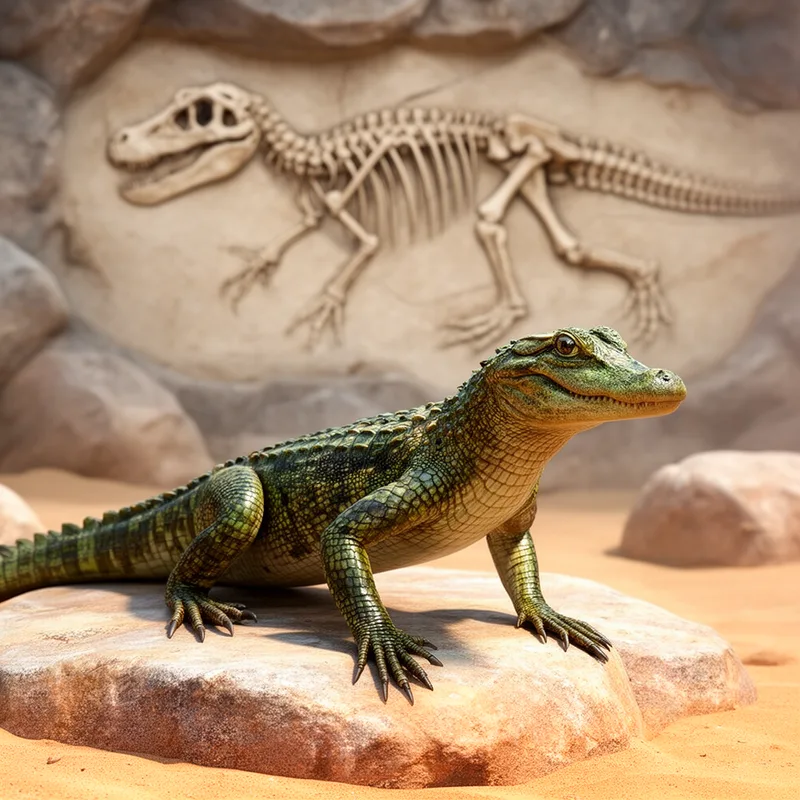
saurian
 3
9.9
3
9.9

- noun
- /ˈsɔːriən/
- Specialized
- In the documentary, the host explained how modern lizards are descendants of prehistoric saurians.
- One saurian
Examples
-
Doc, with great economy, managed to explain to Axel the saurian techniques for manipulating certain tools designed for human hands, specifically the screwdriver and the adjustable wrench.
Fiction book (2002) -
What paleontologist would recognize the potential, test the spot for elements, and suggest a saurian-made tool as the source of the spot?
Fiction book (1998) -
I am concerned with the inability of the human mind to really understand what the passage of one hundred million years means, and why this inability impacts the way that science has viewed the capabilities of the Saurian species.
Fiction book (1998) -
Saurians were sufficiently different physiologically so as to be unknowable.
Fiction book (1998) -
After all, the saurians developed creatures that lived on land which were far larger by several factors than anything that has ever existed in the mammalian world.
Fiction book (1998) -
The museum displayed a variety of fossils, including a remarkable saurian skeleton that fascinated the visitors.
-
After years of studying, the paleontologist published a paper on the anatomy of ancient saurians.
Synonyms
 111
1.8
111
1.8
A cold-blooded animal with dry scaly skin that lays soft-shelled eggs on land, like a snake or lizard
 103
1.0
103
1.0
A small animal with scaly skin, four legs, and a long tail

 1
4.4
1
4.4
A cold-blooded animal like a snake or lizard

An animal like a lizard, often a dinosaur from long ago
Compounds

- Specialized
Preserved bones of a reptile, often a dinosaur, that form a skeleton
Surface Forms
Morphology
saurian = saur + ian
Formally built from the combining form 'saur-' (meaning 'lizard') + the suffix '-ian', but 'saur' is not a standalone English word and the combining form is mainly scientific, so an average B1 learner is unlikely to derive the meaning.
Etymology
Saurian comes from the old Greek word sauros, which means 'lizard'. So a saurian is a reptile like a lizard, and the same root is in dinosaur ('terrible lizard'), which is why the word was once used for dinosaurs and other lizard-like fossils.