
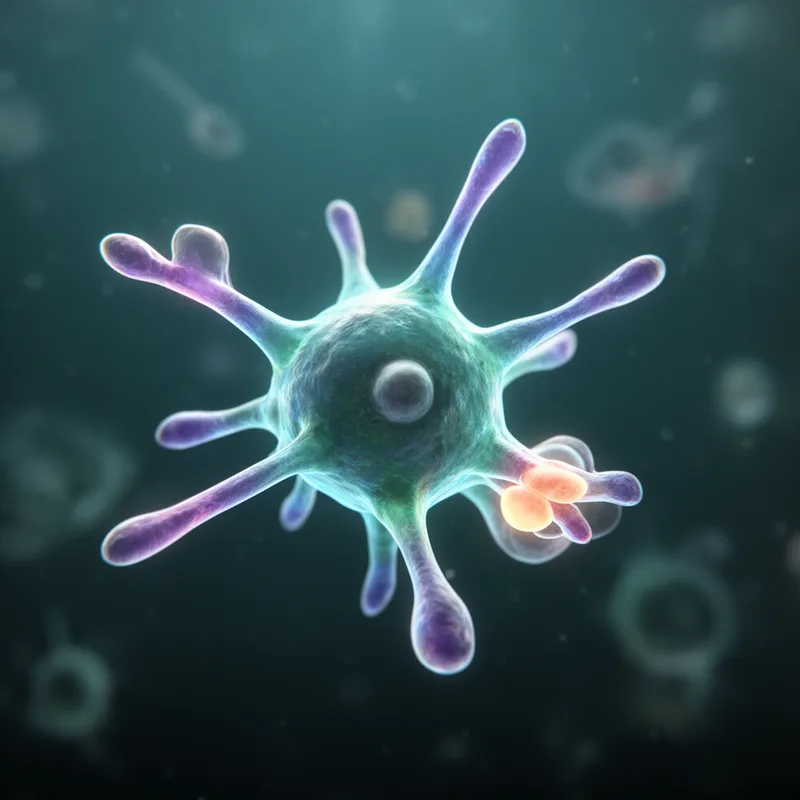
sarcodine
- noun
- /ˈsɑrkəˌdaɪn/
- Archaic
- Under the microscope, the sarcodine extended its pseudopods to engulf a smaller organism.
Examples
-
Amoebas are common examples of sarcodine protozoa found in freshwater environments.
-
A sarcodine can change its shape to move.
-
Biologists often study sarcodine movement to understand cellular dynamics.
-
Some sarcodines are found in freshwater environments.
-
Amoebas are common examples of sarcodine protozoa found in freshwater environments.
-
Under the microscope, the sarcodine extended its pseudopods to engulf a smaller organism.
-
Biologists often study sarcodine movement to understand cellular dynamics.
Synonyms
A one-celled animal that moves and eats using temporary arm-like parts
A tiny single-celled animal that moves and eats using arm-like parts
A tiny single-celled animal that moves and eats using temporary arm-like parts

A single-celled creature with stiff rod-like arms that spread out to move and feed
Surface Forms
Morphology
sarcodine = sarc + dine
The term 'sarcodine' is specialized and not easily understood by breaking down its parts without specific biological knowledge.
Etymology
Sarcodine comes from the Greek root sarc- meaning 'flesh', because these tiny creatures make soft, flesh-like extensions to move and take in food, and so the name points to their 'fleshy' way of moving.

