
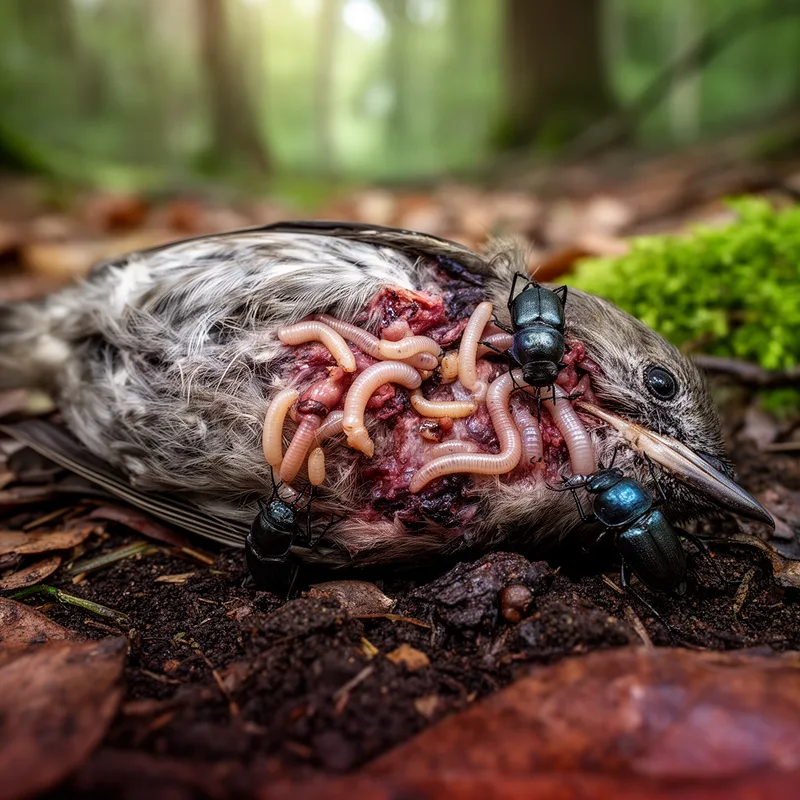
saprozoic
- adjective
- /ˌsæprəˈzoʊɪk/
- Specialized
- A saprozoic organism plays a vital role in the ecosystem by recycling dead animal remains.
Examples
-
Certain worms exhibit saprozoic behavior by consuming decaying animal tissue.
-
Many protozoa are described as saprozoic because they absorb nutrients from decomposing matter.
-
Some saprozoic bacteria are essential for decomposition.
-
The saprozoic organisms play a crucial role in the ecosystem.
-
A saprozoic organism helps break down dead animals, returning nutrients to the soil.
-
Certain saprozoic species thrive in habitats rich in decaying matter, aiding in decomposition.
-
The saprozoic behavior of some fungi contributes to nutrient cycling in their environment.
Synonyms


 1
9.9
1
9.9
To eat dead or rotting animals
 1
9.9
1
9.9
Getting food by breaking down dead plants and animals

An animal that eats dead or decaying matter from plants and animals
Living on or feeding on dead plants and animals

A living thing that eats dead plant and animal matter, like earthworms
Surface Forms
Morphology
saprozoic = sapro + zo + ic
The word is built from specialized combining forms ('sapro-' and 'zo-') plus the adjectival suffix '-ic'; these are technical Greek-derived elements that an average B1 learner would not use to infer the meaning.
Etymology
Saprozoic comes from Greek parts sapro- meaning 'rotten' and -zoic from zo- meaning 'animal', the same root as in zoo. So a saprozoic creature lives by eating or absorbing dead or decaying animal matter.