
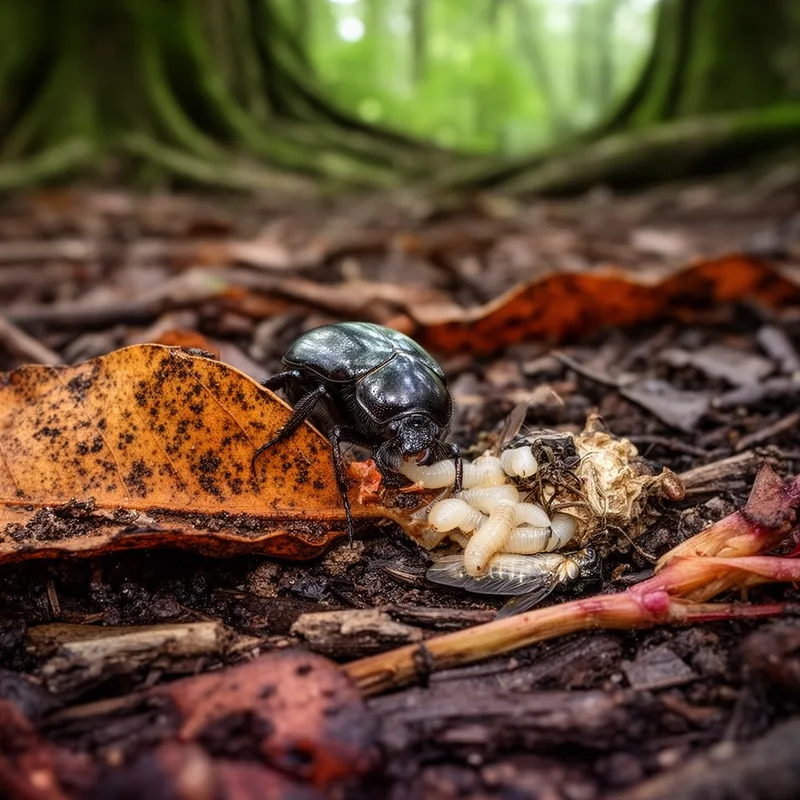
saprophagous
- adjective
- /sæˈprɒf.ə.ɡəs/
- Specialized
- Vultures are not saprophagous; rather, they are considered scavengers that feed specifically on carrion.
Examples
-
The larvae of some flies are saprophagous, helping to recycle nutrients in the ecosystem.
-
The saprophagous beetles help decompose organic matter.
-
Many beetles are saprophagous, feeding on decaying plant and animal materials in the forest floor.
-
Many saprophagous organisms play a crucial role in the ecosystem.
-
Vultures are saprophagous birds that primarily feed on carrion.
-
Certain species of beetles are saprophagous, playing a vital role in decomposing dead animals.
-
The saprophagous lifestyle of these worms helps recycle nutrients back into the soil.
Synonyms


 1
9.9
1
9.9
To eat dead or rotting animals
 1
9.9
1
9.9
Getting food by breaking down dead plants and animals

Feeding on dead animals and their decaying parts

A living thing that eats dead plant and animal matter, like earthworms
Living on or feeding on dead plants and animals
Surface Forms
Morphology
saprophagous = saprophage (semi-transparent) = sapro + phag + ous
Forming the adjective by adding -ous to 'saprophage' is regular and clear, but the base 'saprophage' and its combining elements are specialized biological terms not familiar to average learners.
Etymology
Saprophagous comes from the Greek parts sapro- meaning 'rotten' and -phagous meaning 'eating', so it literally means 'eating rotten things' and is used for animals that feed on dead or decaying matter.