

sallet


 1
9.9
1
9.9
- noun
- /ˈsælɪt/
- Archaic
- A: And now the word "sallet" must serve me to feed on.
Examples
-
Did Evelyn believe that humans should live on 'sallet' alone?
Academic text (2011) -
He wore his sallet tipped back, searching the ground for tracks.
Fiction book (2001) -
A: And I think this word "sallet" was born to do me good.
Academic text (2005) -
Health, physical and moral, formed the primary benefit of Evelyn's 'sallets'.
Academic text (2011) -
Tipping back the visor on his German sallet, he asked her in a big booming voice, "Where do you come from, girl?"
Fiction book (2001) -
The first course for this feast consisted of 35 dishes, of which 30 were some variety of meat; the only vegetables were two 'grand sallets.'
Academic text (2011) -
Although the early Royal Society had a 'Georgical agricultural, or rural Committee' of which Evelyn was a member, he nonetheless felt the need to defend his study of 'sallets' and pot-herbs on political, moral, and scientific grounds.
Academic text (2011) -
Richard II's Compound Sallet, garnished with rose petals and marigolds, chills in the fridge, and Beauvilliers'
Fiction book (1998) -
The knight donned his sallet before charging into battle.
-
During the reenactment, he wore a sallet to complete his medieval costume.
Synonyms
 1
9.9
1
9.9
A light medieval helmet with a narrow eye slit that covers the sides and back of the head

A rounded steel helmet worn by knights in the Middle Ages

A metal helmet with a visor and neck guard that knights wore in the 1400s and 1500s
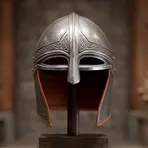
A medieval Scandinavian metal or leather head guard with a raised nose piece and an eye opening

A light metal helmet with a high crest worn by soldiers in the 1500s

A light open helmet without a visor used in the 1500s and 1600s

A light open helmet worn by soldiers long ago
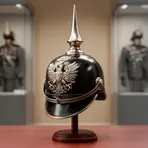
A helmet with a pointed spike on top that German soldiers wore in the 1800s and early 1900s

A German steel helmet worn by soldiers in the World Wars
How Protective

Surface Forms
Etymology
Sallet comes from a name for a small helmet; the ending -et means 'small', like in booklet, so a sallet is a 'small' or light helmet with a visor used in the late Middle Ages.