
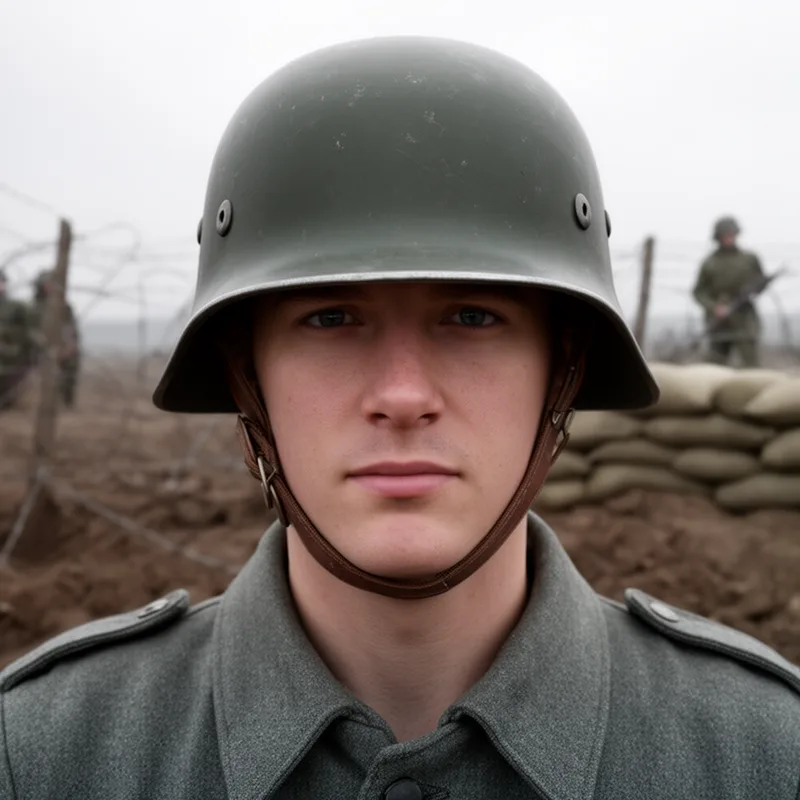
Stahlhelm
- noun
- /ˈʃtɑːlˌhɛlm/
- Archaic
- The Stahlhelm became a symbol of the German army in the twentieth century.
Examples
-
The soldier wore a Stahlhelm during the battle.
-
The soldier wore a Stahlhelm as part of his uniform during the battle.
-
Collectors often seek out authentic Stahlhelm helmets from World War II.
-
Many Stahlhelme were found in the ruins of the old fortress.
-
The soldiers wore Stahlhelm helmets as they marched through the battlefield during World War II.
-
In the museum, we saw a collection of historical military artifacts, including a Stahlhelm from the First World War.
-
During the reenactment, each participant donned a Stahlhelm to accurately portray the soldiers of that era.
Synonyms


 1
9.9
1
9.9
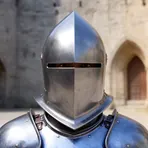
A light helmet with a narrow eye slit used by soldiers in the late Middle Ages
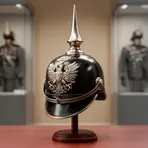
A helmet with a pointed spike on top that German soldiers wore in the 1800s and early 1900s
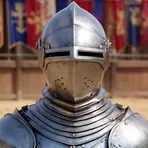
A metal helmet with a visor and neck guard that knights wore in the 1400s and 1500s

A light open helmet without a visor used in the 1500s and 1600s

A light open helmet worn by soldiers long ago
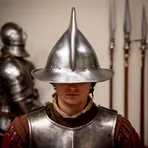
A light metal helmet with a high crest worn by soldiers in the 1500s
Surface Forms
Etymology
Stahlhelm comes from the German words Stahl 'steel' and Helm 'helmet'. So it literally means 'steel helmet' and refers to the metal headgear soldiers wore in the World Wars.