

casquetel
- noun
- Archaic
- Unlike heavier helmets, the casquetel provided more comfort and better visibility.
Examples
-
The soldier wore a casquetel to keep his head protected during training exercises.
-
Museums often display the casquetel alongside other historical armor from the Renaissance period.
-
The knight wore a casquetel during the battle.
-
Many casquetels were found in the archaeological dig.
-
The soldier wore a casquetel to keep his head protected during training exercises.
-
Unlike heavier helmets, the casquetel provided more comfort and better visibility.
-
Museums often display the casquetel alongside other historical armor from the Renaissance period.
Synonyms
 1
9.9
1
9.9

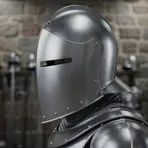
A light medieval helmet with a narrow eye slit that covers the sides and back of the head

 1
9.9
1
9.9
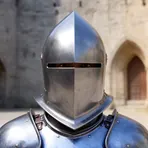
A light helmet with a narrow eye slit used by soldiers in the late Middle Ages

A light open helmet worn by soldiers long ago
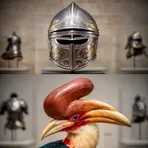
A metal helmet worn by soldiers long ago or a hard, helmet-like growth on some birds' heads
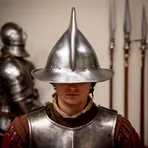
A light metal helmet with a high crest worn by soldiers in the 1500s

A rounded steel helmet worn by knights in the Middle Ages
How Protective

Surface Forms
Etymology
The word casquetel comes from the French word casque meaning 'helmet' plus a small ending -el, so you can imagine it as a 'small helmet'. That's why casquetel means a light, open helmet without a visor used in the 16th and 17th centuries.