
radiotelegraphy
- noun
- /ˌreɪdioʊˈtɛlɪˌɡræfi/
- Archaic
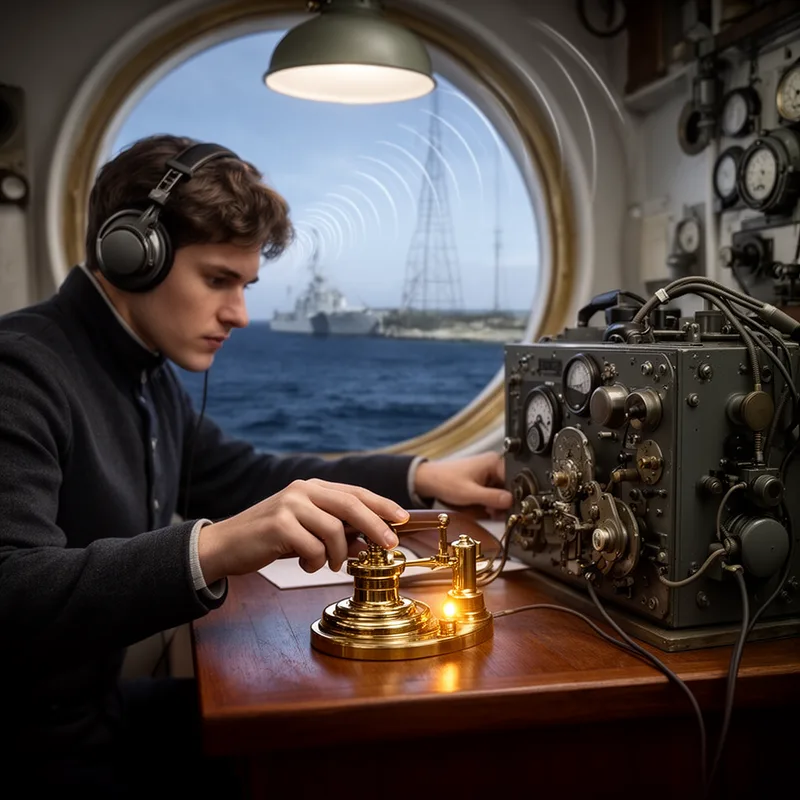
- Many ships use radiotelegraphy to communicate with each other while navigating in open waters.
Examples
-
During World War I, soldiers relied on radiotelegraphy to send critical messages across the battlefield.
-
The DX-300 does pull in radiotelegraphy from the ARRL flagship, W1AW in Connecticut with a random-wire antenna.
Blog text (12) -
This line of thought induces me to draw notice to a 1930s cinema presentation of (tube-based) radiotelegraphy at http://www.youtube.com/watch?v=wBFwTtS4P (or do a YouTube search on the title, "From Backblocks to High Seas").
Blog text (12) -
The invention of radiotelegraphy revolutionized long-distance communication by allowing messages to be sent without wires.
Synonyms



 1
7.4
1
7.4
Sending messages by radio without using wires
 1
9.5
1
9.5
A system for sending messages by radio instead of using wires

Sending messages by radio using dots and dashes called Morse code

Sending and receiving messages by radio waves
Surface Forms
Morphology
radiotelegraphy = telegraphy (transparent) = radio + telegraph + y
The word denotes telegraphy performed by radio—combining 'radio' with the existing noun 'telegraphy' yields the stated meaning directly.
Etymology
Radiotelegraphy is made of radio and telegraphy, where tele- means 'far' and graph means 'write', so telegraphy is sending written messages over a long distance. Adding radio, which points to using radio 'waves' to carry the signal, gives a word that means sending telegrams by radio, like Morse code, instead of by wire.