

telegraph
 53
4.4
53
4.4

- noun
- /ˈtɛlɪˌgræf/
- Archaic
- In the 19th century, the telegraph revolutionized long-distance communication by sending messages quickly over wires.
- telegraph line
- telegraph operator
- telegraph wire
Loading YouTube…
Watch on YouTubeAnd I went, so this is before Telegraph, this is before Internet.
- And I went, so this is before Telegraph, this is before Internet.
- Because banks, railways, Telegraph operators needed security.
- From the station roof, Lawrence and Hubert Young cut the Telegraph link between Palestine and Syria.
- He gets his big break by scooping up the child of the Telegraph operator.
- Landon says that they have always found themselves enthralled with old Telegraph keys.
- Now, social media will eventually be brought into check, just like the Telegraph did.
- We've talked about Samuel Morris's Telegraph.
- So this is before we had very many sophisticated electronics, but we had telegraphs.
- OK, But can you at least confirm that you are thinking and that you're familiar with more current technology than a Telegraph?
- All of a sudden Telegraph wires that were dormant sprung to life and would transmit signals all by themselves.
- We don't think about a Telegraph as being a amazingly disruptive new technology.
Examples
-
Finally, Mr. Johnson emerged from the telegraph office with a piece of paper fluttering in his hand.
Fiction book (2000) -
The large main room is filled with telegraph operators receiving election returns.
Fiction book (2002) -
Might not there be a telegraph office in town?
-
The only place open will be the telegraph office.
-
The net may be different from the telegraph in several ways, but this is not one of them.
Academic text (1997) -
In theory, the Monument was to house a telegraph office and other office space.
Academic text (2008) -
The army had to take over the telegraph... or we'd be cut off from the world.
-
Landon says that they have always found themselves enthralled with old Telegraph keys.
-
From the station roof, Lawrence and Hubert Young cut the Telegraph link between Palestine and Syria.
-
Samuel Morse, who in 1844 would commercialize the telegraph, came to observe.
Academic text (2000)
Compounds


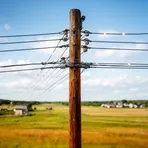
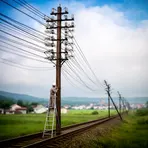

- Archaic

 1
7.7
1
7.7
A small lever device used to send messages as dots and dashes by making and breaking an electric circuit

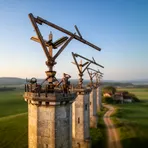
- Archaic
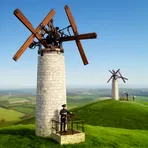
A line of towers with moving panels that send messages by sight over long distances
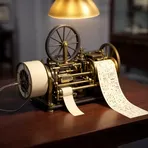


- Archaic
A system that sends messages over long distances using towers with moving arms or lights


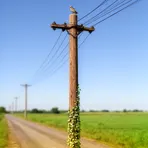

- Archaic
A line of towers with moving shutters that send messages people can see over long distances
How Far
- Specialized
1
4.1

- Specialized
26
2.7
- Archaic
53
4.4
- Archaic
- Specialized
22
3.7
Surface Forms
Morphology
telegraph = tele + graph
The learned elements suggest something for writing or signaling at a distance, but the specific historical device for long-distance wired communication is not fully obvious to most learners.
Etymology
Telegraph comes from the Greek parts tele- 'far', as in telephone, and -graph 'write', as in autograph. The telegraph was the machine that 'wrote from far', so the name became the word for the system that sent messages across long distances.