

semaphore telegraph
- noun
- /ˈsɛmɪfɔr ˈtɛlɪɡræf/
- Archaic
- Before the electric telegraph, networks of semaphore telegraphs stretched across Europe.
Examples
-
The semaphore telegraph was crucial for communication.
-
The army relied on the semaphore telegraph to send urgent messages across the countryside.
-
A semaphore telegraph station was located on the hilltop for maximum visibility.
-
Do you know how a semaphore telegraph works?
-
The sailor used a semaphore telegraph to send messages to the ship on the horizon.
-
In the past, a semaphore telegraph was essential for communicating between distant towns.
-
During the war, they relied on the semaphore telegraph to transmit vital information without using wires.
Synonyms
 1
8.5
1
8.5

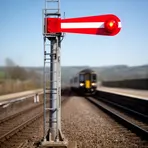
A device with moving arms or lights that sends signals to people far away

A line of towers with moving panels that send messages by sight over long distances

A line of towers with moving shutters that send messages people can see over long distances

A way to send visible messages over long distances using towers with moving arms

A system that sends messages over long distances using towers with moving arms or lights
How Far
- Specialized

 1
4.1
1
4.1

- Specialized
26
2.7
- Archaic
53
4.4
- Archaic
- Specialized
Surface Forms
Morphology
Both constituents contribute directly to the compound meaning: 'semaphore' specifies the visual signaling method and 'telegraph' denotes a message-sending system, so a B1 learner who knows both words can infer a telegraph that uses semaphore towers. The noun–noun composition is regular in English and mirrors similar constructions in other languages, making the meaning compositional and easily derivable.
Etymology
Semaphore telegraph comes from old towers with large movable arms or shutters that could be placed in different positions to make simple signals. Watchers at the next tower would read the positions as a message, so the name came to mean 'a system for sending messages by sight'.