
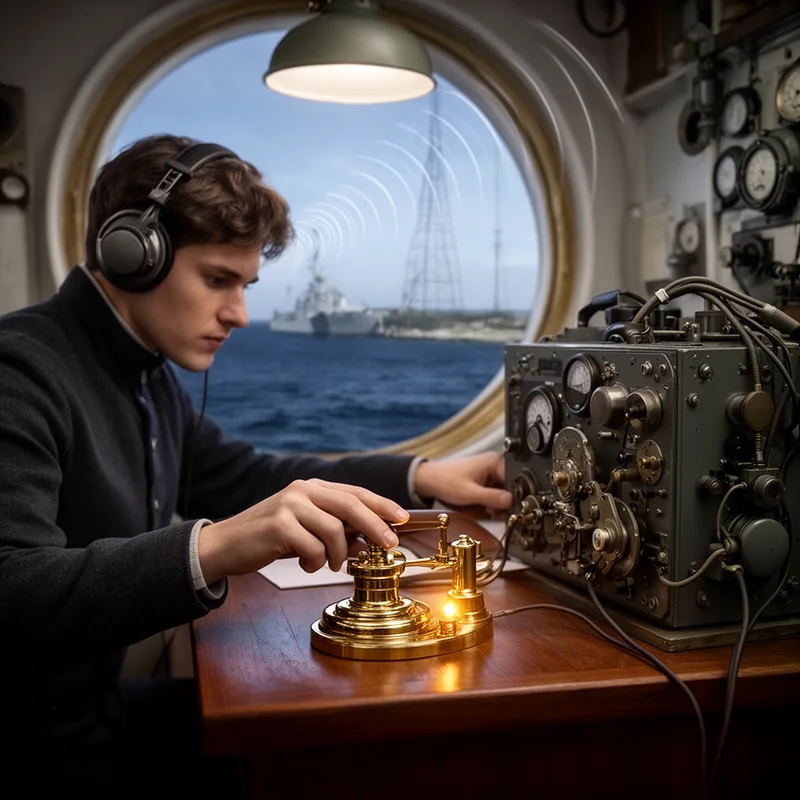
radiotelegraphy


 1
8.9
- noun
- /ˌreɪdioʊˈtɛlɪˌɡræfi/
- Archaic
- Many ships use radiotelegraphy to communicate with each other while navigating in open waters.
Examples
-
During World War I, soldiers relied on radiotelegraphy to send critical messages across the battlefield.
-
The DX-300 does pull in radiotelegraphy from the ARRL flagship, W1AW in Connecticut with a random-wire antenna.
Blog text (12) -
This line of thought induces me to draw notice to a 1930s cinema presentation of (tube-based) radiotelegraphy at http://www.youtube.com/watch?v=wBFwTtS4P (or do a YouTube search on the title, "From Backblocks to High Seas").
Blog text (12) -
The invention of radiotelegraphy revolutionized long-distance communication by allowing messages to be sent without wires.
Synonyms
 1
7.4
Sending messages by radio without using wires
 1
4.4
Sending and receiving messages by radio waves
 1
9.5
A system for sending messages by radio instead of using wires
 1
7.1
Sending messages by radio using dots and dashes called Morse code
Surface Forms
Morphology
radiotelegraphy = telegraphy (transparent) = radio + telegraph + y
The word denotes telegraphy performed by radio—combining 'radio' with the existing noun 'telegraphy' yields the stated meaning directly.
Etymology
Radiotelegraphy is made of radio and telegraphy, where tele- means 'far' and graph means 'write', so telegraphy is sending written messages over a long distance. Adding radio, which points to using radio 'waves' to carry the signal, gives a word that means sending telegrams by radio, like Morse code, instead of by wire.