
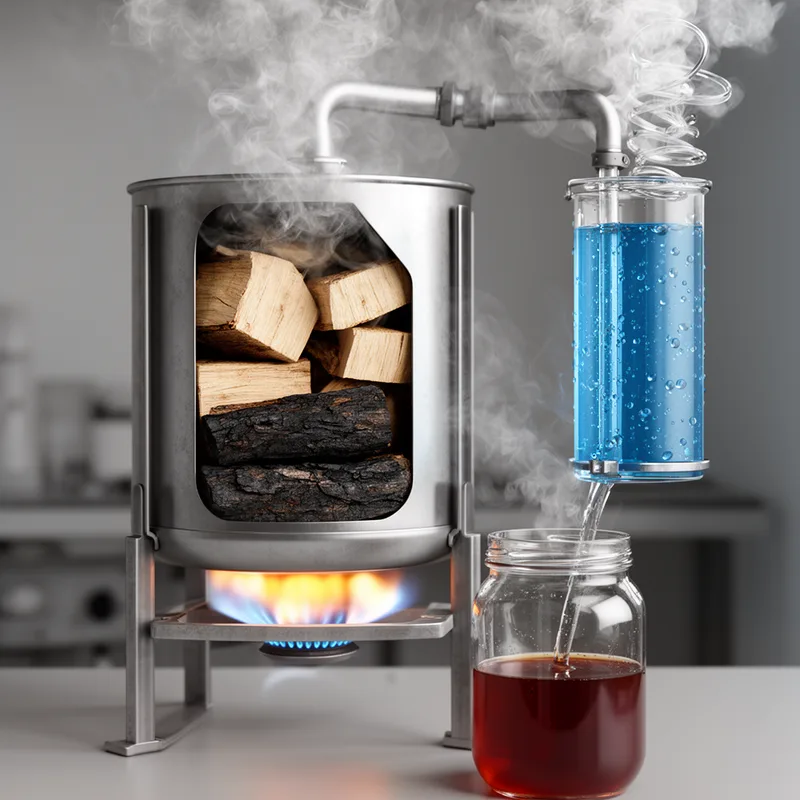
pyroligneous
- adjective
- /ˌpaɪrəˈlɪnɪəs/
- Specialized
- The chemical was identified as a pyroligneous acid derived from the destructive distillation of timber.
Examples
-
Early industrial processes often used pyroligneous liquids in the production of acetic acid.
-
A smoky flavor can result from traces of pyroligneous substances left in the food.
-
The pyroligneous acid is a byproduct of wood distillation.
-
He studied pyroligneous substances in his chemistry class.
-
The chemical engineer explained that pyroligneous liquids are produced by heating wood without oxygen.
-
In producing vinegar, pyroligneous components are often extracted from the wood during the distillation process.
-
She noted that the pyroligneous smoke gives a unique flavor to the barbeque especially when burning hardwood.
Synonyms
Form when heat breaks wood into liquids and oils

Made by heating material strongly without air so it breaks down
Compounds

- Specialized
A reddish-brown liquid made by heating wood that contains vinegar and gives a smoky taste
Surface Forms
Morphology
Etymology
Pyroligneous comes from the parts pyro- and lign-, where pyro- means 'fire' and lign- means 'wood'. It describes something made when wood is heated, especially the liquids or acids that come from heating wood.

