
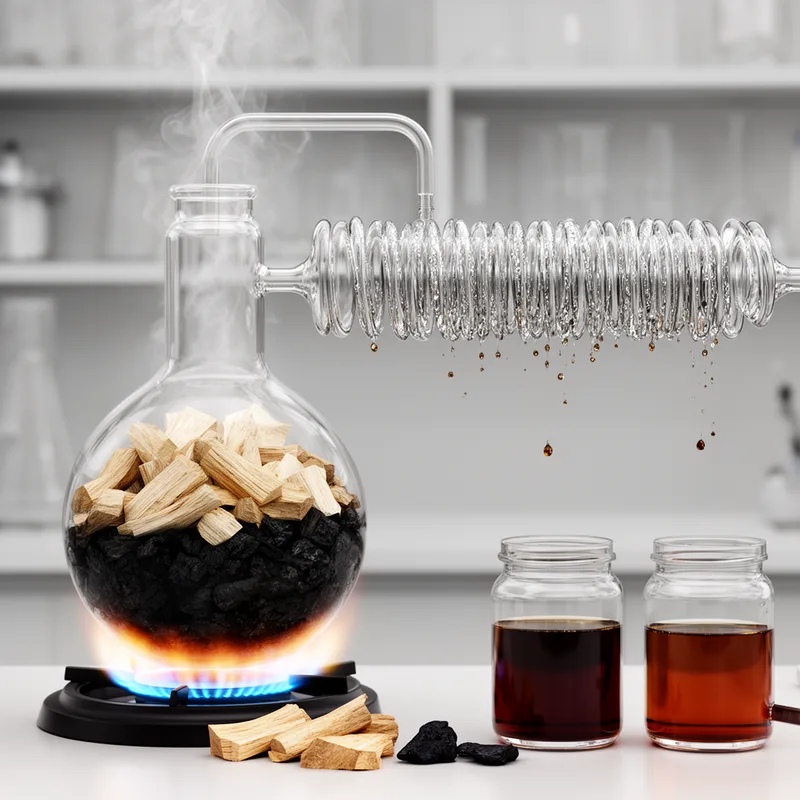
pyrolignic
- adjective
- /ˌpaɪrəˈlɪɡnɪk/
- Specialized
- The laboratory isolated a pyrolignic acid from the charred wood sample.
Examples
-
The sharp odor was traced to pyrolignic oils released by the burning wood.
-
Early chemists studied the pyrolignic liquid collected during charcoal production.
-
The pyrolignic acid is derived from the carbonization of wood.
-
We studied the properties of pyrolignic substances in our chemistry class.
-
The laboratory isolated a pyrolignic acid from the charred wood sample.
-
Early chemists studied the pyrolignic liquid collected during charcoal production.
-
We studied the properties of pyrolignic substances in our chemistry class.
Synonyms
Made from wood by heating it until it breaks into liquids and gases

Made by heating material strongly without air so it breaks down
Surface Forms
Morphology
pyrolignic = pyro + lign + ic
This is a learned classical formation from pyro- 'fire' + lign- 'wood' + -ic, but the specialized technical meaning is not easily predictable for an average learner.
Etymology
Pyrolignic comes from the parts pyro- and lign-, where pyro- means 'fire' and lign- means 'wood'. So, Pyrolignic describes a substance made when wood is heated and broken down.

