

purple amaranth
- noun
- /ˈpɜrpl ˈæməˌræntθ/
- She grew purple amaranth in her backyard for both its ornamental beauty and edible seeds.
Examples
-
The purple amaranth stands out in gardens due to its vibrant leaves and tall, striking flowers.
-
Many cultures use purple amaranth seeds as a nutritious grain in traditional dishes.
-
The garden was filled with vibrant purple amaranth plants.
-
Have you seen the purple amaranth blooming this season?
-
Many cultures use purple amaranth seeds as a nutritious grain in traditional dishes.
-
The purple amaranth stands out in gardens due to its vibrant leaves and tall, striking flowers.
-
She grew purple amaranth in her backyard for both its ornamental beauty and edible seeds.
Synonyms

 1
9.9
1
9.9

A tall garden plant with long colorful flower spikes
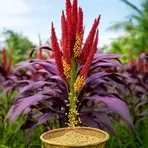
A tall tropical plant with long red flower spikes and purple leaves whose seeds are eaten as cereal

A tall tropical plant with long red flower spikes and edible seeds

A tall tropical plant with hairy stems and long red flower spikes whose seeds are used like cereal
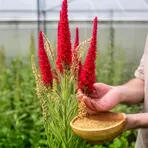
A tall American annual with hairy stems, long red flower spikes, and seeds used as cereal
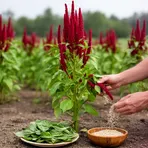
A tall plant with red flower spikes whose leaves people eat and whose seeds people use for food
Surface Forms
Morphology
The phrase denotes an amaranth plant that is purple — the adjective 'purple' straightforwardly modifies the noun 'amaranth' with no idiomatic or metaphorical shift. This adjective + noun compositional pattern is cross‑linguistically common and fully predictable for learners who know both constituent words.
Etymology
Purple amaranth gets its name from the old Greek word amaranth meaning 'not fading' or 'unfading', because its bright purple flowers and leaves seem to keep their colour for a long time. So the name helps us remember a tall, purple plant whose flowers and seeds stay bright and lasting.