
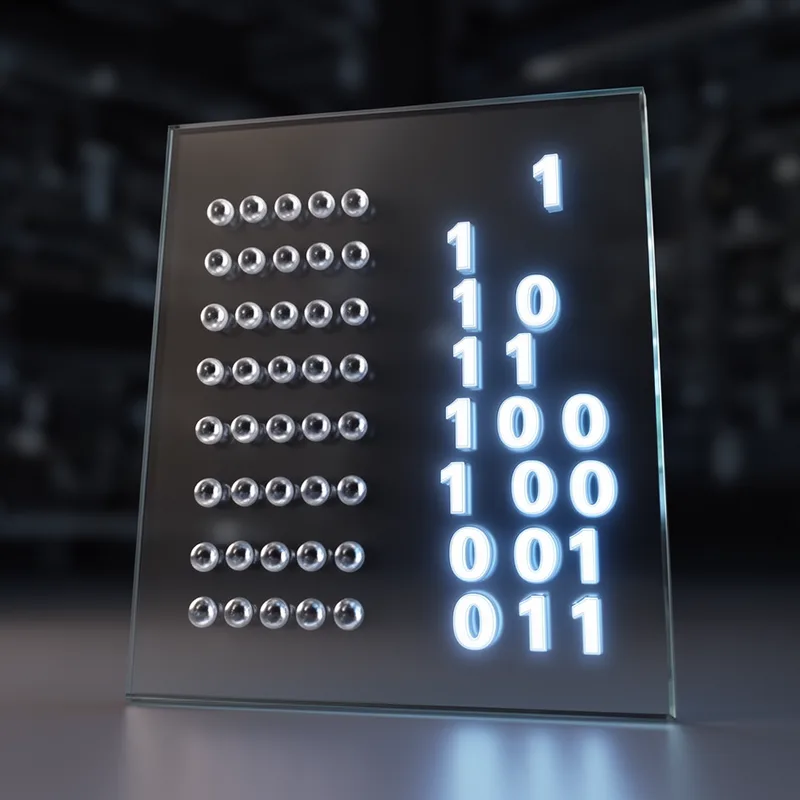
pure binary numeration system
- noun
- /pjʊr ˈbaɪnəri ˌnjʊməˈreɪʃən ˈsɪstəm/
- Specialized
- Computers represent data internally using a pure binary numeration system that relies on only two digits: 0 and 1.
Examples
-
Every number can be translated into the pure binary numeration system for processing by digital devices.
-
In a pure binary numeration system, the digits are 0 and 1.
-
The efficiency of digital circuits stems from the simplicity of the pure binary numeration system.
-
A pure binary numeration system uses only two digits.
-
Computers represent data internally using a pure binary numeration system, which relies solely on the digits 0 and 1.
-
Every integer can be converted into the pure binary numeration system for use in digital processing.
-
The pure binary numeration system is fundamental in computer science because it uses only two symbols.
Synonyms
 1
3.5
1
3.5

A way of writing numbers with only 0s and 1s

A number system that uses only the numbers 0 and 1, often used by computers

A way to write numbers using only 0 and 1
A way to write numbers and information using only the digits 0 and 1
Surface Forms
Morphology
pure + binary + numeration + system
The phrase is transparently compositional: 'binary' specifies the digit set (0 and 1), 'numeration' refers to numbering/counting, and 'system' signals a positional scheme, while 'pure' restricts it to only binary digits. A learner who knows these constituents can readily infer it denotes a numbering system that uses exclusively base‑2 digits.
Etymology
Pure binary numeration system paints a simple picture: many tiny switches that are either 0 or 1, like 'off' or 'on'. So, it means a number system that uses only those two digits, and that's how computers store numbers and information.