

pulmonary trunk
- noun
- /ˈpʌlməˌnɛri trʌŋk/
- Specialized
- The anatomy class studied the structure and function of the pulmonary trunk.
Examples
-
The surgeon carefully examined the pulmonary trunk before proceeding with the heart operation.
-
The pulmonary trunk carries deoxygenated blood to the lungs.
-
A blockage in the pulmonary trunk can lead to life-threatening complications.
-
Can you identify the pulmonary trunk in this diagram?
-
The pulmonary trunk carries deoxygenated blood to the lungs for oxygenation.
-
After passing through the right ventricle, blood flows into the pulmonary trunk.
-
In a normal heart, the pulmonary trunk branches into two arteries that supply each lung.
Synonyms
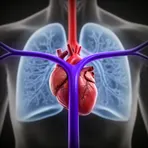
A large blood vessel that carries blood without oxygen from the right side of the heart to the lungs
Surface Forms
Morphology
The modifier 'pulmonary' clearly signals a relation to the lungs, so a learner will know the phrase concerns a lung-related structure; however, the noun 'trunk' in everyday B1 vocabulary typically means torso, tree trunk, or luggage and does not reliably convey 'main artery'. While many languages use a cognate term for the anatomical 'trunk' (e.g., Spanish 'tronco pulmonar'), the exact sense 'the large artery carrying deoxygenated blood' is specialized and not fully predictable from the constituents, giving only partial transparency.
Etymology
Pulmonary trunk uses a simple picture: pulmonary means 'lung' and trunk is like the main stem of a tree that splits into branches. So the name helps you remember that this large blood vessel is the main stem leaving the heart that splits into right and left branches to take blood to the 'lungs'.

