
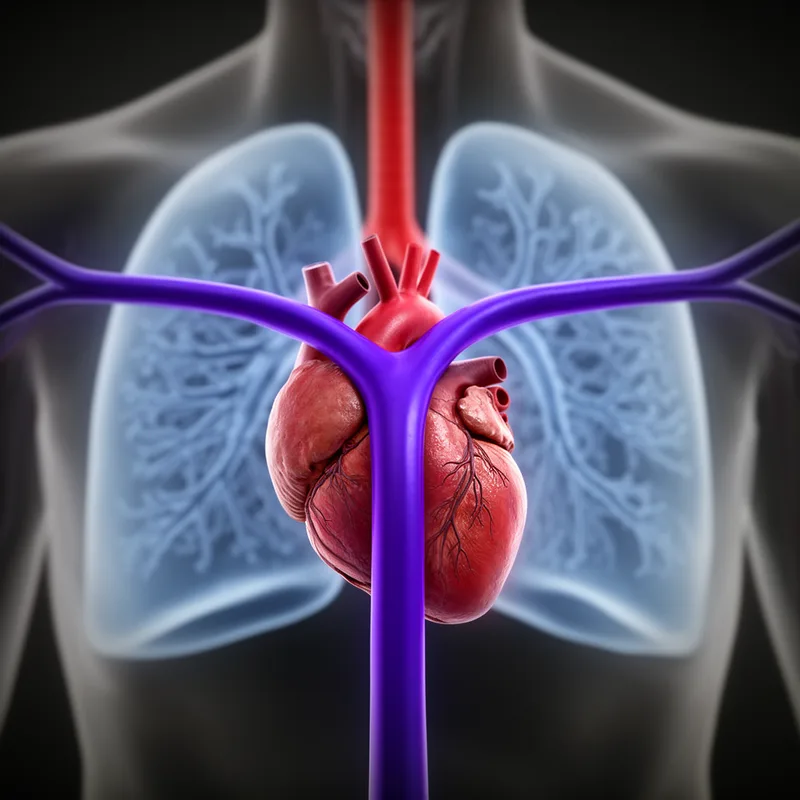
truncus pulmonalis
- noun
- /ˈtrʌŋkəs pʌlˈmoʊnəlɪs/
- Specialized
- The truncus pulmonalis branches into the right and left pulmonary arteries to supply blood to both lungs.
Examples
-
During the operation, the surgeon carefully isolated the truncus pulmonalis before proceeding.
-
Blockage in the truncus pulmonalis can lead to serious complications affecting lung function.
-
The truncus pulmonalis is essential for pulmonary circulation.
-
During surgery, the truncus pulmonalis was carefully examined.
-
Blockage in the truncus pulmonalis can lead to serious complications affecting lung function.
-
The truncus pulmonalis branches into the right and left pulmonary arteries to supply blood to both lungs.
-
During the operation, the surgeon carefully isolated the truncus pulmonalis before proceeding.
Synonyms

A large vessel that carries blood from the right heart to the lungs and splits into two arteries
Surface Forms
Morphology
truncus + pulmonalis
The term is compositionally built from Latin roots: 'truncus' = main part or trunk and 'pulmonalis' = of the lungs (pulmonary). A learner who knows both constituents can infer it denotes the lung-related 'trunk' (i.e. the pulmonary trunk/major pulmonary vessel), so the meaning is directly derivable despite being a technical anatomical term.
Etymology
Truncus pulmonalis comes from Latin: truncus means 'trunk' and pulmonalis means 'of the lungs'. Think of a single 'trunk' leaving the heart that then splits into two branches to reach the lungs, so the name fits the large artery that carries blood from the heart to both lungs.

