
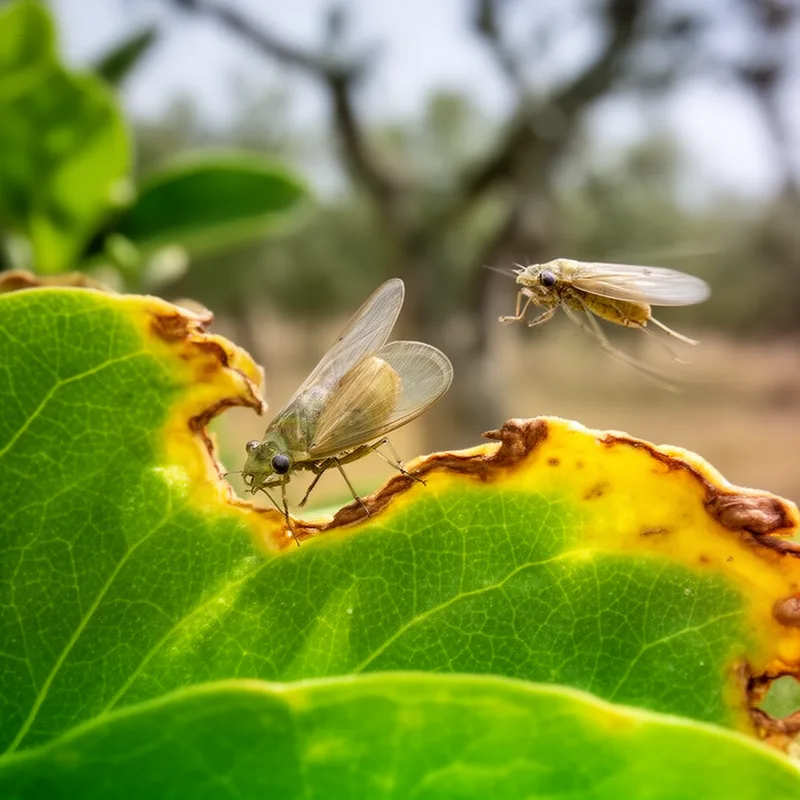
psyllid
 1
9.9
1
9.9

- noun
- /ˈsɪlɪd/
- Specialized
- The psyllids' presence there is the result of more than 5 years of research by IPRL scientists in cooperation with the Australian Biological Control Laboratory in Indooroopilly, Australia, near Brisbane, and their colleagues with Australia's Commonwealth Scientific and Industrial Research Organization.
- melaleuca psyllid
Examples
-
Psyllid nymphs, says Balciunas, typically form a communal shelter of delicate white threads.
Academic text (1997) -
Due to citrus greening disease, spread by the Asian citrus psyllid, growers spent about 6 cents per box of citrus marketed on research, Sparks says.
Blog text (11) -
"We're encouraged about research efforts to knock down disease and pest problems like the psyllid so we can protect our trees."
Blog text (11) -
To date, some 350,000 psyllids have been released at a variety of South Florida locations.
Academic text (2004) -
This tiny insect is another natural enemy of melaleuca from Australia, and both adults and young psyllids feed on the tree's sap.
Academic text (2004) -
Young seedlings are the most vulnerable to the psyllids' attack, but the insects can also stunt the growth of bigger trees and reduce flowering and seed production.
Academic text (2004) -
Psyllids are also called jumping plant lice because the highly active adults, which resemble miniature cicadas, jump between leaves and plants when alarmed.
Academic text (1997) -
Sap feeders included gall-forming adelgids, as well as insects such as scales, aphids, psyllids, and whiteflies.
Academic text (2010) -
PHOTO (COLOR): The melaleuca psyllid (Boreioglycaspis melaleucae), first released in Florida in 2002, can kill small seedlings, stunt new vegetative growth, and accelerate aging of mature leaves.
Academic text (2004) -
The young plants were heavily infested with psyllids, causing their leaves to curl and yellow.
Synonyms

A small jumping insect that sucks plant juice and can damage fruit trees
A small insect with strong back legs that jumps and feeds on plant juices

A small insect like an aphid that sucks juices from plants

A small insect that sucks sap from plants
Surface Forms
Morphology
psyllid = psyll + id
A technical formation from a Greek combining form 'psyll-' (not a standalone English word) plus the taxonomic suffix '-id'; the meaning is specialized and not inferable by an average B1 learner from the parts.
Etymology
The word psyllid comes from the Greek word psyllos, meaning 'flea', because these tiny insects jump like fleas. That's why a psyllid is a small, flea-like insect that feeds on 'plant juices'.