
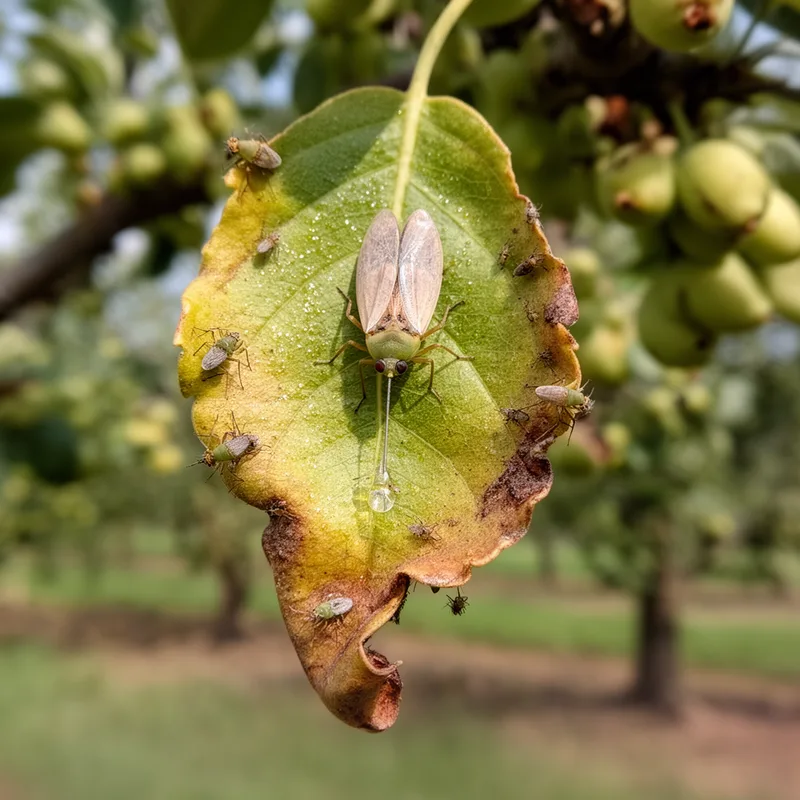
psylla
- noun
- /ˈsɪlə/
- Specialized
- Because insecticides are not used, natural enemies such as parasites and predators are able to increase to the point that secondary pests such as leafrollers, pear psylla, aphids, and leafminers are also controlled.
- pear psylla
Examples
-
During the summer, many psylla can be seen jumping from plant to plant in search of juice.
-
"When it became known that Surround controlled pear psylla as well as it does, we had to make and ship a lot more than we anticipated."
Academic text (2000) -
The cost of three to four applications of Surround is about equal to one application of the insecticide pear growers use against pear psylla.
Academic text (2000) -
The extracts killed whiteflies, aphids, pear psyllas, and other insects in tests at the Floral and Nursery Plants Research Unit and other locations.
Academic text (1997) -
These included pear psylla, the European red mite, two-spotted mite, and pear rust mite.
Academic text (1997) -
Pear psylla (the major insect pest of pears), leafhoppers, and leafminers didn't pose serious problems for growers in either of the test years.
Academic text (1997) -
The farmer noticed that the psylla were damaging the leaves of his pear trees.
-
To control the psylla population, he applied organic insecticides to the orchard.
Synonyms

 1
9.9
1
9.9

A small jumping insect that feeds on plant juices and damages plants
A small insect with strong back legs that jumps and feeds on plant juices
Surface Forms
Etymology
The word psylla comes from an old Greek word psyllos meaning 'flea'. Like a flea, a psylla is a very small jumping insect that feeds on plant juices, so the name reminds us it is a jumping plant louse.