
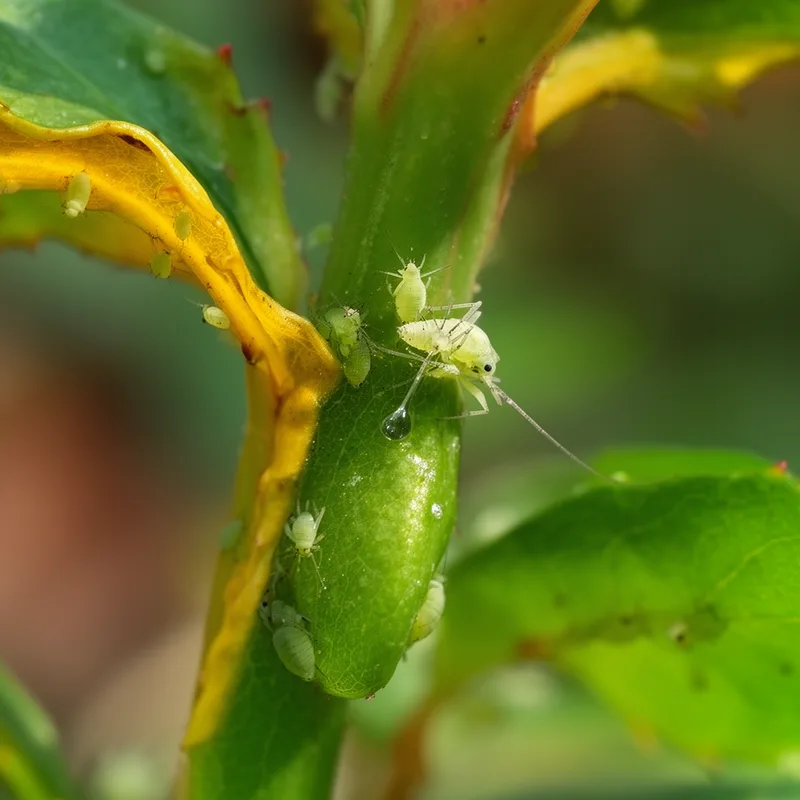
plant louse
- noun
- /plænt laʊs/
- The plant louse infested the garden quickly.
Examples
-
Many plant lice can damage crops significantly.
-
Farmers often struggle to control plant louse infestations, as these small insects can quickly damage crops.
-
The plant lice can weaken crops by draining vital nutrients from stems and leaves.
-
Gardeners often use ladybugs to control plant lice in greenhouses.
-
The rosebush was infested with plant lice, causing its leaves to curl and yellow.
-
The plant louse feeds on the sap of plants, which can weaken and even kill weaker plants.
-
After noticing the leaves turning yellow, she discovered that the garden was infested with plant louse.
Synonyms
 14
5.6
14
5.6

A small insect that sucks sap from plants and often damages them

A small insect that sucks sap from plants
Surface Forms
Morphology
The compound follows a straightforward noun + noun composition: 'plant' specifies the host/location and 'louse' names a small parasitic insect, so a B1 learner who knows both words can infer 'a louse that lives on or feeds on plants'. The pattern is cross-linguistically common (equivalent compounds or terms exist in many languages), making the meaning directly derivable and transparent.
Etymology
Plant louse comes from the image of a tiny insect that sits on a leaf and sucks the plant's juice like a louse on a person. So, it means 'a small insect that feeds by sucking the juices from plants'.