
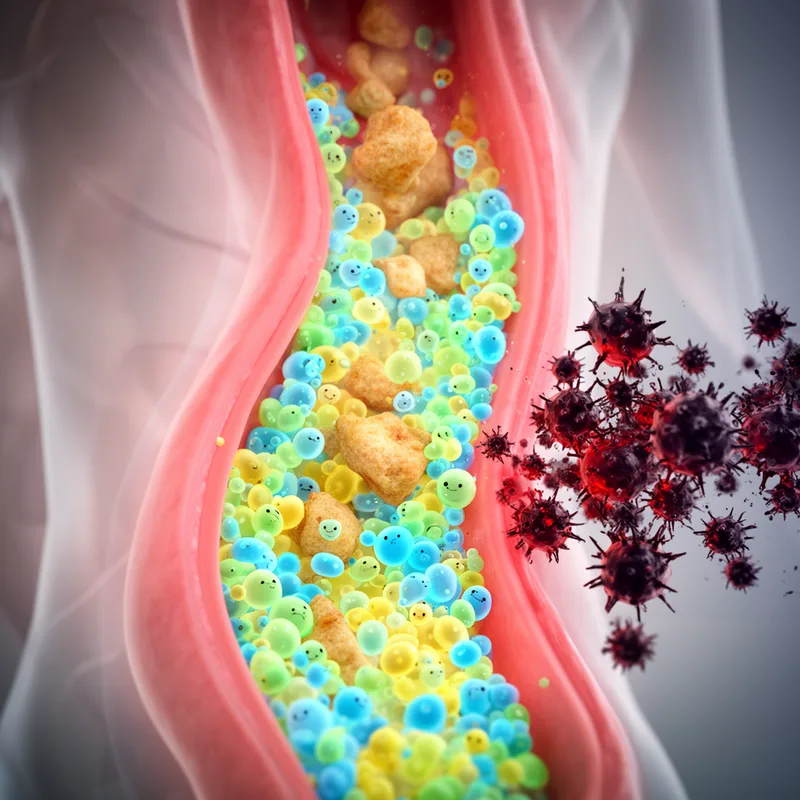
probiotic microflora
- noun
- /ˌproʊbaɪˈɑtɪk ˌmaɪkrəˈflɔːrə/
- Specialized
- Regular consumption of yogurt can help maintain healthy probiotic microflora in the digestive tract.
Examples
-
Antibiotics may disrupt the balance of probiotic microflora in the gut, leading to digestive issues.
-
Scientists are studying how probiotic microflora influence immune function and general well-being.
-
A healthy probiotic microflora is vital.
-
Did you know about probiotic microflora?
-
Antibiotics may disrupt the balance of probiotic microflora in the gut, leading to digestive issues.
-
Regular consumption of yogurt can help maintain healthy probiotic microflora in the digestive tract.
-
Scientists are studying how probiotic microflora influence immune function and general well-being.
Synonyms

 3
5.9
3
5.9

A group of tiny living things like bacteria and fungi that live in a place, for example the body

 1
4.5
1
4.5
Tiny living things, especially bacteria, that live in the intestines and help digestion and the immune system

Good bacteria that live in the gut and help digestion
How Beneficial
- Specialized

- Specialized
1
4.5
Surface Forms
Morphology
This is a straightforward adjective+noun combination: 'probiotic' (beneficial microorganism) modifies 'microflora' (the community of microscopic organisms), so the combined meaning—a community of beneficial bacteria—is directly derivable from the parts. The composition follows normal English noun-phrase logic and is cross-linguistically transparent, so a learner who knows both constituents would understand the MWE.
Etymology
Probiotic microflora may come from older scientific words: probiotic meaning 'for life' and microflora meaning 'tiny plants' that live inside the body. Imagine small, friendly 'plants' in your gut that help digestion and keep bad germs away, and that's why the phrase now means the helpful bacteria living in the gut.