
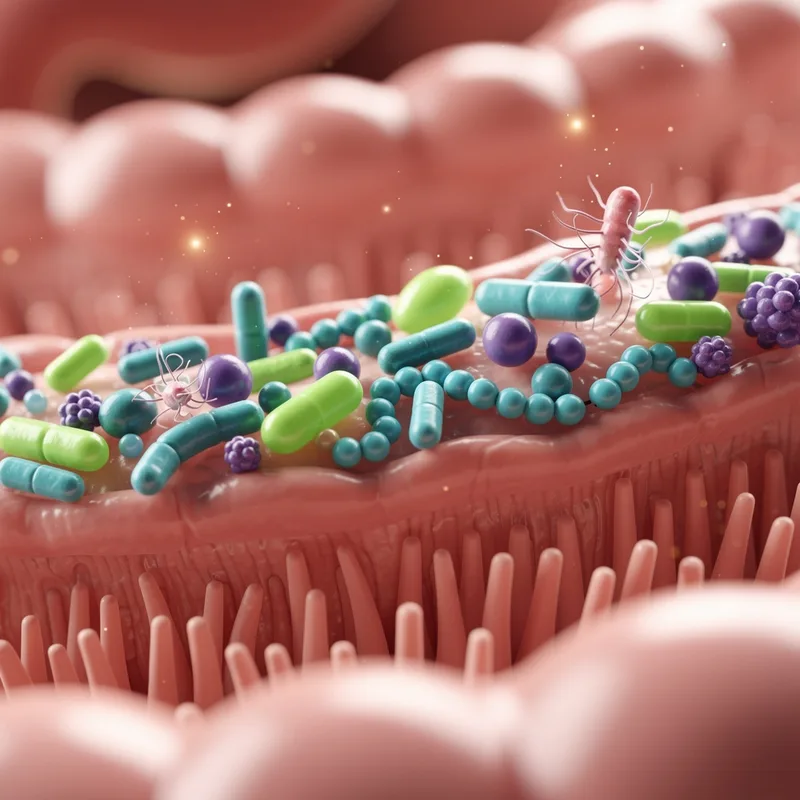
microbiome
 3
5.9
3
5.9

- noun
- /ˌmaɪkroʊˈbaɪoʊm/
- Specialized
- The human gut microbiome plays a crucial role in digestion and overall health.
- intestinal microbiome
Loading YouTube…
Watch on YouTubeIt, it disrupts the gut microbiome, it impacts your mental health.
- It, it disrupts the gut microbiome, it impacts your mental health.
- And the studies are clearly linking ultra processed foods and microbiome dysfunction.
- The microbiome, our microbiome is synonymous with life.
- Somehow the, the microbiome changes dramatically for the better.
- It's because fecal matter contains a lot of the microbiome elements.
- We could tell you what's going on with your gut microbiome.
- Next is you have to optimize your gut microbiome.
- They tumble all the way down our gut to feed our gut microbiome.
- The soil dwelling microbes that make up a plants microbiome.
- All the people who share a home and their pets all share a single microbiome.
- So things like sauerkraut, kimchi, Cafe kombucha, that's good for your gut microbiome.
Examples
-
Brilliant strategy number six, nourish your gut microbiome with fermented foods.
-
Maintaining a healthy microbiome is essential for preventing various diseases.
-
Exercise changes the gut microbiome to a friendly microbiome.
-
Recent studies underline the importance of the human gut microbiome in human health.
Academic text (2018) -
In humans, the microbiome consists of more than 100 trillion bacteria that live in our gut, mouth, and skin.
Academic text (2014) -
The microbiome is particularly important because it is a filter of perhaps our largest environmental exposure—our diet.
Academic text (2012) -
Research indicates that a diverse microbiome can enhance the immune system's function.
Synonyms
 1
6.8
1
6.8
Tiny living things like bacteria that live in a place such as your gut or soil
Surface Forms
Morphology
Etymology
Microbiome joins micro- 'small', as in microscope, and biome 'place of life', related to biology. So a microbiome is a 'small place of life' — the tiny community of bacteria, fungi and other little living things that live in a body or in a place.