
biome
 2
6.9
2
6.9

- noun
- /ˈbaɪoʊm/
- Specialized
- An element of the Great Plains at large, this binational biome shares a generally flat topography and grassland flora and fauna.
- terrestrial biomes
- forest biome
- major biome
Examples
-
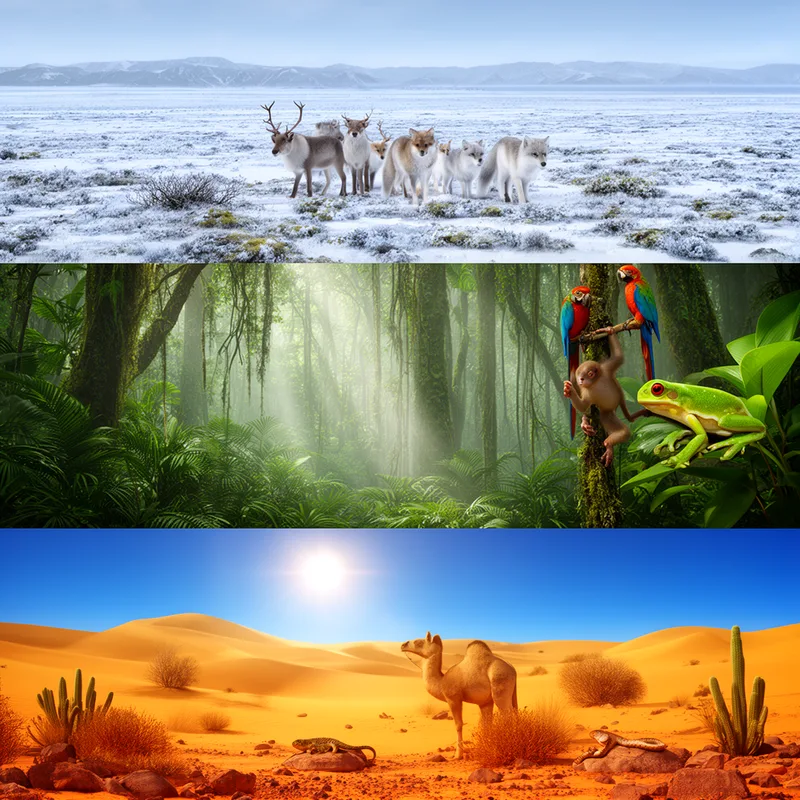
In the rainforest biome, you'll find a diverse range of plants and animals thriving in a warm and humid climate.
-
Visitors to the arboretum exhibit will discover the seven major types of ecological communities, or biomes, in South Africa.
Academic text (1997) -
The relationship between climate and vegetation is called the Biome concept.
-
That was its natural Biome, and human settlement and development converted that into agricultural land.
-
Soil-moisture conditions generally control the biome transition from forest to grassland in the southern United States.
Academic text (2012) -
Many insects thrive in balmy biomes, but cold temperatures like those looming over this ice laden landscape are a major constraint on insect life.
-
The desert biome is characterized by its sparse vegetation and extreme temperature fluctuations between day and night.
-
Coral reefs form an underwater biome that is home to various marine species, significantly contributing to ocean biodiversity.
Synonyms
 98
3.4
98
3.4
A community of living things and the environment that work together


 1
6.2
1
6.2
A large area of land or water with its own climate, plants, and animals
 1
5.5
1
5.5
A group of plants, animals, and other living things that live in the same place and depend on each other

An area of land and water that has its own types of plants and animals
An area with the same natural conditions that has certain plants and animals
How Vegetated

Surface Forms
Etymology
Biome comes from the Greek root bio- meaning 'life', the same root you see in biology. So a biome is like a 'place of life' — a large natural area named for the plants, animals, and climate that live there.