
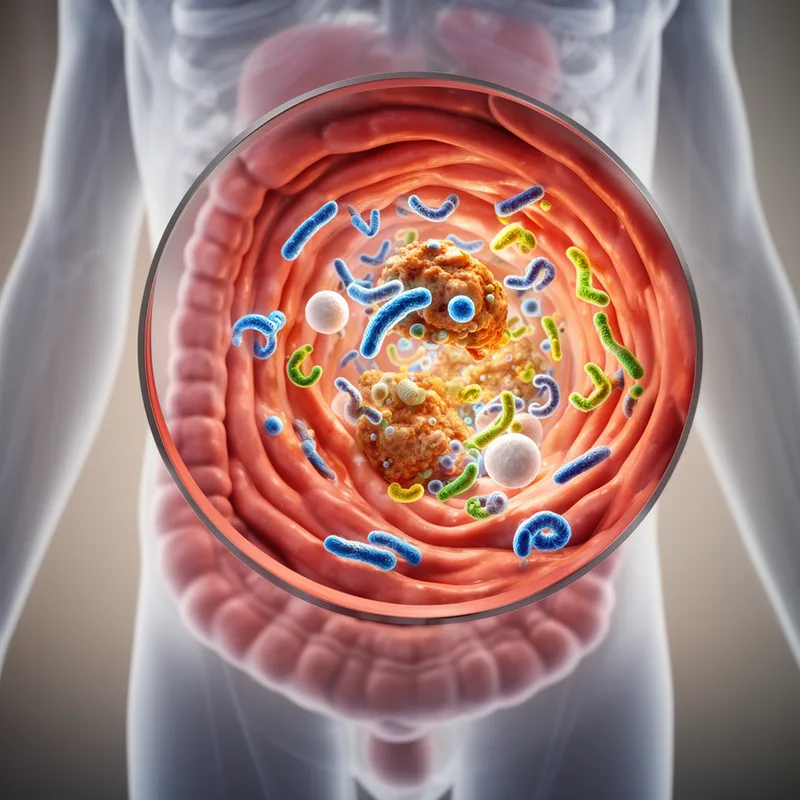
intestinal flora


 1
4.5
1
4.5
- noun
- /ɪnˈtɛstɪnəl ˈflɔrə/
- Specialized
- Because phages infect only certain types of bacteria, their use can reduce destruction of needed intestinal flora by antibiotics.
- antibiotics could suppress intestinal flora
Examples
-
Bacteria known as probiotics can help maintain a healthy intestinal flora in our digestive system.
-
Normal intestinal flora.
Fiction book (1994) -
Increase in lactobacilli concentration can show a normal occurrence in the development of intestinal flora of heifers.
Academic text (2015) -
These bacteria are present in the normal intestinal flora of humans and other warm-blooded animals and are found in large numbers in fecal wastes.
Academic text (2002) -
Eating foods rich in fiber is important for supporting your intestinal flora and overall gut health.
-
Antibiotics can disrupt the balance of intestinal flora, leading to digestive issues.
Synonyms
 3
5.9
3
5.9
A group of tiny living things like bacteria and fungi that live in a place, for example the body

Good bacteria that live in the gut and help digestion
A community of good bacteria in the gut that help digestion and stop harmful germs
Antonyms

How Healthy
- Specialized

- Specialized
1
4.5
Surface Forms
Morphology
intestinal + flora
The phrase combines a clear locative adjective 'intestinal' (related to intestines) with 'flora', which signals a community of living organisms; this makes it largely compositional so learners can infer ‘organisms living in the intestines’. However, 'flora' is somewhat technical and historically refers to plant life, and the extension to microbes (bacteria) is a specialized semantic shift that may not be fully predictable to a B1 learner without prior exposure, so it is only partially transparent.
Etymology
Intestinal flora comes from an old idea that the inside of the gut (intestinal) was like a garden of small plants (flora). So, intestinal flora now means 'the tiny living things, like bacteria, that live in the intestines and help keep you healthy'.