

to pour forth
 2
7.1
2
7.1

- phrasal verb
- /pɔr fɔrθ/
- After hours of brainstorming, ideas began to pour forth, and the team felt energized to tackle the project.
Examples
-
During the ceremony, heartfelt stories started to pour forth from the guests, bringing tears to many eyes.
-
Day to day pours forth speech, and night to night reveals knowledge.
Blog text (24) -
Thank you very much for all the love you have and are continuously pouring forth, especially over the last few years.
Blog text (34) -
The clouds may pour forth a shower of tears.
Fiction book (1997) -
The rippling song poured forth again.
Fiction book (1998) -
Rats had poured forth from the foundations of buildings after the San Francisco earthquake.
Fiction book (1995) -
A hot white light pours forth from it, like the parched sheen of highly polished bone.
Fiction book (1997) -
Through them, wisdom is poured forth, and people's minds are enlightened so they may know God and behold His glory.
Blog text (4) -
The Chinese government took severe measures to show its anger: quasi-governmental contacts were suspended; intensified polemics, including personal attacks, poured forth; and round after round of military exercises were carried out.
Academic text (1997) -
As the storm intensified, rain began to pour forth from the sky, drenching everything in its path.
Synonyms
 171
1.0
171
1.0
To let liquid fall in small drops
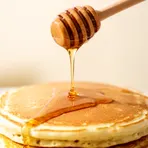 18
2.7
18
2.7
To pour a thin stream of liquid slowly over food
 16
2.9
16
2.9
Move or pour out in a steady stream, often a liquid
 15
2.8
15
2.8
To let liquid or saliva fall in small drops
 12
1.4
12
1.4
Liquid falls in small drops down a surface
 7
3.4
7
3.4
To flow slowly in small amounts through tiny holes
 4
6.5
4
6.5
Give off liquid slowly, often in drops
 3
3.5
3
3.5
Liquid flows slowly out of something through small holes
 1
4.8
1
4.8
To flow slowly through small holes or cracks

To pass slowly through a surface and come out as small drops

Slowly leaking thick, sticky liquid
Antonyms


How Much

Surface Forms
Morphology
The meaning 'to flow or issue out from a source' is directly and compositionally derivable from 'pour' (to make liquid flow) combined with 'forth' (outward from a source). Although somewhat literary in register, the outward-flow sense is transparent and predictable, so a B1 learner who knows the constituents would likely understand it.
Etymology
Pour forth comes from a simple picture: pour (to let liquid flow) and forth (outward), like water from a jug or blood from a wound. So when sounds, words, or tears pour forth, they 'flow out' quickly or in large amounts, which is why it means 'to flow out'.