

posse comitatus
- noun
- /ˈpɑːseɪ kəˈmɪtətəs/
- Archaic
- When the sheriff formed a posse comitatus, local citizens volunteered to join the search for the fugitives.
Examples
-
The sheriff called for a posse comitatus to track down the escaped prisoners.
-
The law allowed him to summon a posse comitatus in times of emergency.
-
Historically, a posse comitatus could be assembled to enforce court orders or capture criminals.
-
During the manhunt, the local authorities organized a posse comitatus of volunteers.
-
The sheriff gathered a posse comitatus to help search for the escaped convict.
-
During the emergency, the mayor called for a posse comitatus to maintain order in the streets.
-
In rural communities, a posse comitatus is often formed to support local law enforcement in times of need.
Synonyms

 ∞
2.3
∞
2.3

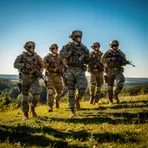
An organized group of people like soldiers or police
 702
2.4
702
2.4
A small group of people organized to do one job, like in the army or sports
 553
5.8
553
5.8
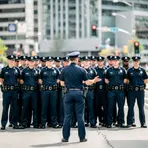
An organized group of ordinary people who act as soldiers in emergencies
 119
5.8
119
5.8
A group of people organized to work or fight together
 47
7.5
47
7.5
A group of people the sheriff gathers to catch criminals
 1
3.0
1
3.0
A small group of police officers who deal with a special kind of crime
 1
9.9
1
9.9
A group of loyal warriors who protect an important person
How Official
- Formal
152
3.7
 146
2.0
146
2.0
- Archaic
553
5.8

 1
4.1
1
4.1
Surface Forms
Morphology
Although the constituent glosses ('group summoned' and 'armed retinue') hint at groups of people, the compound is a fixed Latin legal term referring specifically to a doctrine limiting military involvement in domestic law enforcement. This technical, historically specific legal meaning is not compositionally derivable from the parts for an average B1 learner, so the expression is opaque.
Etymology
Posse comitatus comes from old Latin where posse meant 'power' and comitatus meant 'county'. Long ago a sheriff could call local men to form a force to catch criminals, so the phrase now means a temporary group that helps the authorities.