
posse comitatus
- noun
- /ˈpɑːseɪ kəˈmɪtəs/
- Formal
- Many debates about military intervention in domestic issues reference posse comitatus as a legal barrier.
Examples
-
In fact, posse comitatus is one of the most misunderstood and misinterpreted US statutes ever enacted.
Academic text (2006) -
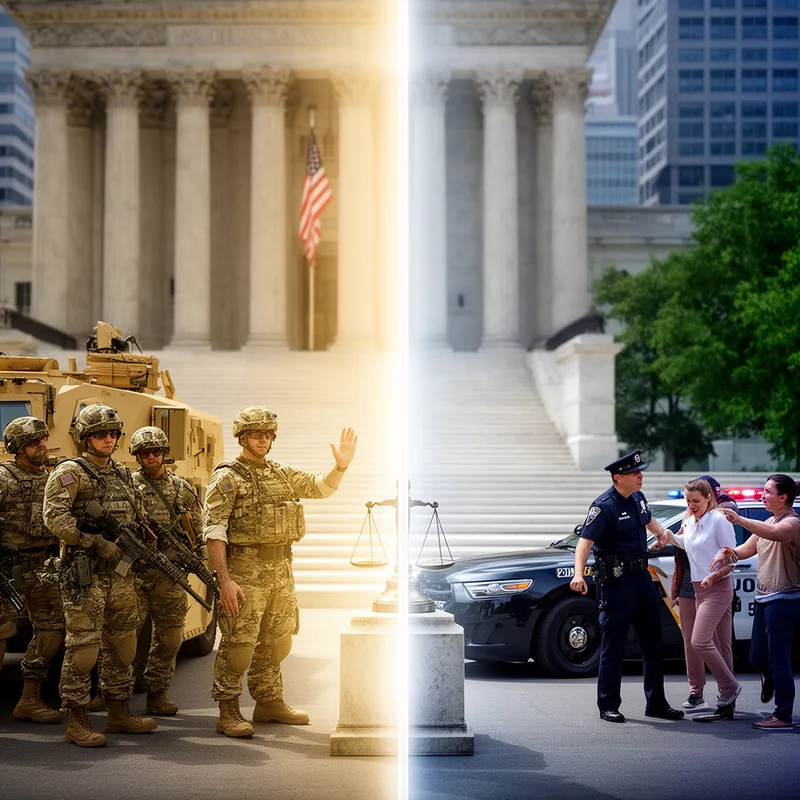
The principle of posse comitatus restricts the federal military from engaging in civilian law enforcement.
-
Citing posse comitatus as a justification to separate military and law enforcement powers, therefore, is a misreading of its intent.
Academic text (2006) -
Understanding posse comitatus is essential for grasping the separation of military and police roles in the United States.
Surface Forms
Morphology
Although the constituent glosses ('group summoned' and 'armed retinue') hint at groups of people, the compound is a fixed Latin legal term referring specifically to a doctrine limiting military involvement in domestic law enforcement. This technical, historically specific legal meaning is not compositionally derivable from the parts for an average B1 learner, so the expression is opaque.
Etymology
Posse comitatus as a law name borrows the same Latin words posse 'power' and comitatus 'county' to remind people that local civil power, not the national army, should handle police work. That's why the law named posse comitatus limits the military from acting as police inside the country.

