
polydispersity
- noun
- /ˌpɒlɪdɪˈspɜːrsɪti/
- Specialized
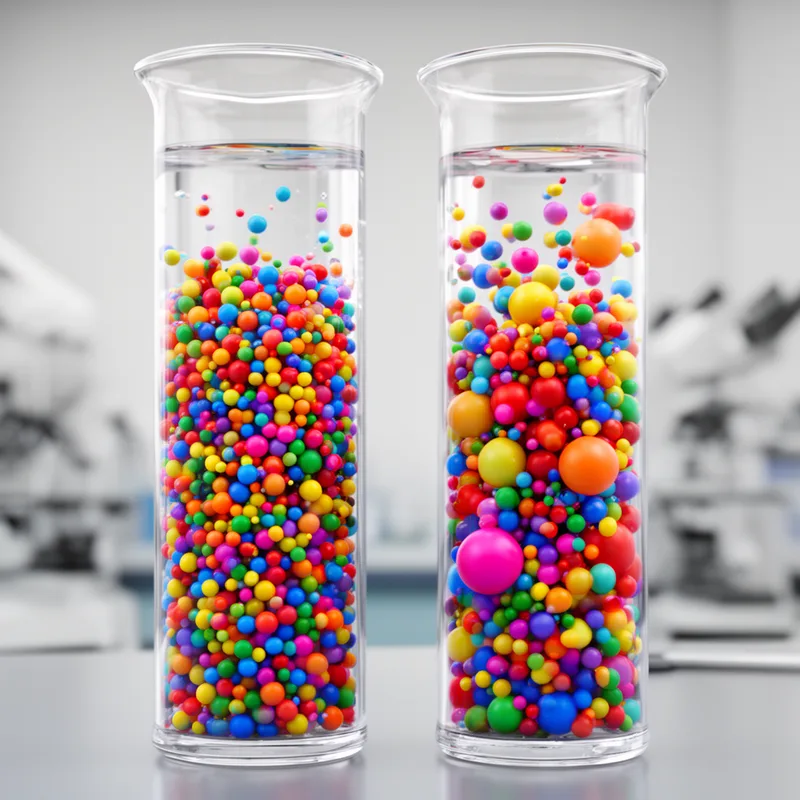
- A low polydispersity indicates that the polymer molecules are nearly the same size.
Examples
-
The polydispersity of the sample was measured to determine the uniformity of the polymer chains.
-
Researchers aim to reduce polydispersity to improve the material's performance in industrial applications.
-
The polydispersity of the sample affects its properties.
-
Higher polydispersity can lead to unpredictable behavior.
-
The polydispersity of the sample was measured to determine the uniformity of the polymer chains.
-
A low polydispersity indicates that the polymer molecules are nearly the same size.
-
Researchers aim to reduce polydispersity to improve the material's performance in industrial applications.
Synonyms

The amount that tiny parts in a sample differ in size or weight

A state with many different kinds of things
How Variable


Surface Forms
Morphology
polydispersity = dispersity (semi-transparent) = poly + disperse + ity
The word is built transparently from 'poly' plus 'dispersity', but the chemistry-specific sense is technical rather than directly predictable for all learners.
Etymology
Polydispersity comes from poly- meaning 'many' and disperse meaning 'to scatter'. So, polydispersity is a measure of how many different sizes are 'scattered' in a sample, in other words how varied the particles are.