
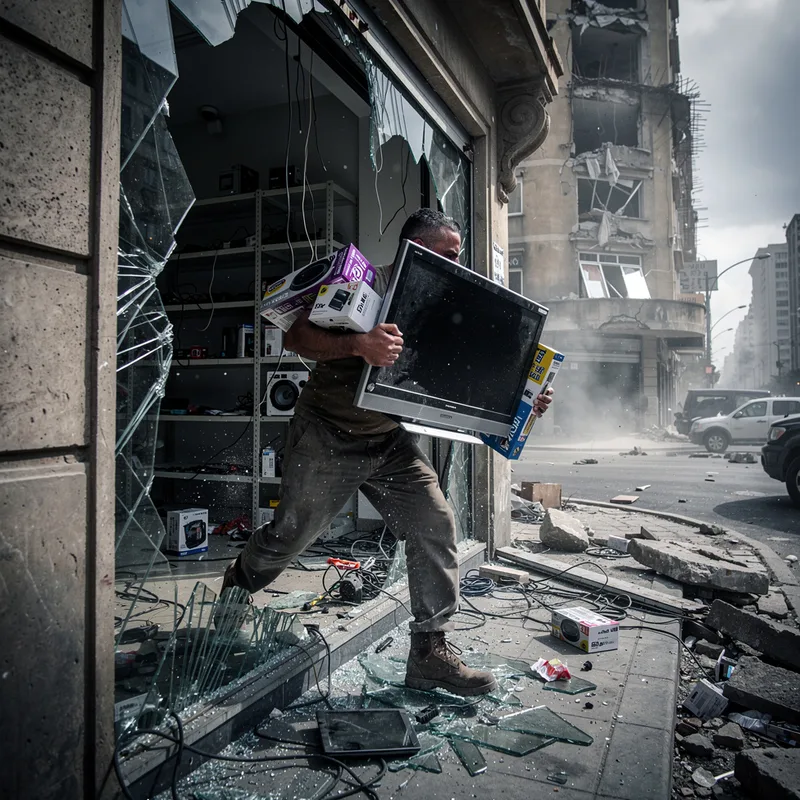
pillaging
 7
7.7
7
7.7

- noun
- /ˈpɪlɪdʒɪŋ/
- To my knowledge, there is no systematic pillaging of archaeological sites in Eastern Africa comparable to the situation in Mali.
- pillaging of sites
Examples
-
The soldiers were charged with the pillaging of the abandoned town, taking anything of value they could find.
-
Plenty of villages ripe for pillaging.
-
As one of the Europeans observed, the expedition often made its way by shooting and pillaging.
Academic text (2006) -
Finally, pillaging involved the seizing of supplies alongside the destruction of property.
-
Communities are being disrupted by environmental pillaging to fuel China's insatiable need for resources.
Academic text (2007) -
Retirement back to Messina was ordered after a few weeks and a very successful pillaging expedition to Agrigento, conducted by Roger.
Academic text (2010) -
Bajai Baura is a small, poor town that suffers from constant pillaging by thieves.
Fiction book (1994) -
In fact, it more closely resembled decentralized, disorganized looting and pillaging rather than a cohesive military action.
Academic text (2018) -
During the war, pillaging often left villages stripped of their resources and in utter ruin.
-
The historical accounts detailed the pillaging that occurred after the battle, when looters took advantage of the chaos.
Synonyms
 749
2.3
749
2.3
Stealing things from people and places such as shops and banks using force or threats
 72
4.9
72
4.9
Stealing things from shops, often during a riot or disaster
 5
8.1
5
8.1
Stealing things from buildings during war or riots
 2
6.0
2
6.0
The act of taking valuable things by force, often during war
 2
7.9
2
7.9
The act of attacking people to steal from them, often done by organized gangs
 1
9.2
1
9.2
The act of looting and destroying a place during war
 1
9.9
1
9.9
Violent stealing of things from people, often during war


 1
9.9
1
9.9
Taking goods by force, often during war or disorder
 1
8.7
1
8.7
A violent attack to steal things from places

Taking things by force from a place, often during war

An act of stealing goods, often the cargo from a ship

An attack on ships or coasts to steal goods
Antonyms


How Violent

Surface Forms
Morphology
Etymology
Pillaging comes from the old French piller, which meant 'to pluck' or 'to strip'. A helpful image is the English word 'pluck' — taking things away quickly — and that's why pillaging means stealing goods by force, often during war.