
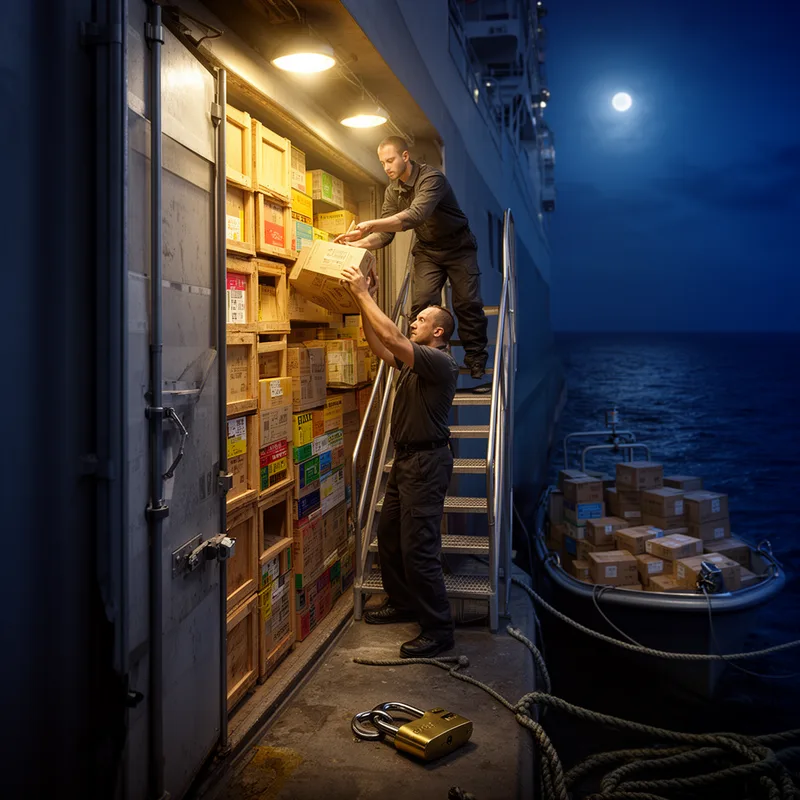
plunderage
- noun
- /ˈplʌndərɪdʒ/
- The crew was charged with plunderage after goods mysteriously disappeared from the ship’s hold.
Examples
-
Suspicions of plunderage grew when several valuable items were missing on arrival.
-
Insurance policies often exclude losses caused by plunderage during shipping.
-
The crew was charged with plunderage after the ship docked.
-
Many incidents of plunderage go unreported at sea.
-
Insurance policies often exclude losses caused by plunderage during shipping.
-
The crew was charged with plunderage after goods mysteriously disappeared from the ship’s hold.
-
Suspicions of plunderage grew when several valuable items were missing on arrival.
Synonyms

 749
2.3
749
2.3

Stealing things from people and places such as shops and banks using force or threats
 356
1.1
356
1.1
An act of taking someone else's property without permission to keep it
 98
6.9
98
6.9
A planned theft of valuable things from a building like a bank
 72
4.9
72
4.9
Stealing things from shops, often during a riot or disaster
 45
7.2
45
7.2
Stealing something that belongs to someone else to keep it
 27
7.0
27
7.0
Taking money or goods that someone gave you to look after and using them for yourself
 14
5.6
14
5.6
The act of taking things that belong to other people without permission
 7
7.7
7
7.7
Taking things from places like shops during war or disaster
 5
1.0
5
1.0
Taking something that belongs to another person without permission
 2
6.0
2
6.0
The act of taking valuable things by force, often during war

 1
9.9
1
9.9
An act of attacking and taking control of a ship or plane to steal from it
 1
7.9
1
7.9
Things taken by force during war or riots
 1
9.9
1
9.9
Taking goods by force, often during war or disorder

Illegally moving money or goods to use for yourself

An attack on ships or coasts to steal goods

Taking things by force from a place, often during war
Antonyms


How Serious

Surface Forms
Morphology
Etymology
The word plunderage comes from plunder, which means 'to steal goods', so imagine pirates taking a ship's cargo. The ending -age means 'the act or result', so plunderage is the act of stealing goods, especially from a ship's cargo.