
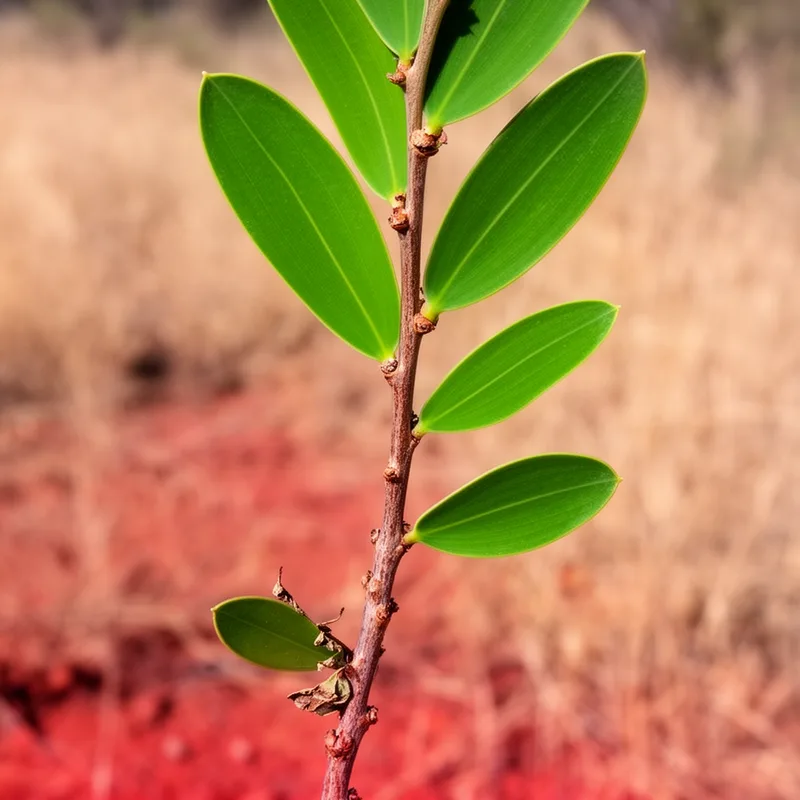
phyllodial
- adjective
- /ˌfɪl.əˈdaɪ.əl/
- Specialized
- The phyllodial structure of the plant helps it conserve water.
Examples
-
You can identify the species by its phyllodial branches, which resemble flattened leaves.
-
Many acacias are known for their phyllodial leaves.
-
Many Australian plants have phyllodial leaves instead of true leaves.
-
Scientists studied the phyllodial development to understand adaptation mechanisms in arid environments.
-
The phyllodial branches are a distinctive feature of this acacia species.
-
Many Australian plants have phyllodial leaves that serve the same function as true leaves.
-
The unique phyllodial structures in these plants allow them to thrive in dry climates.
Synonyms

Shaped like a leaf
How Leaf-Like

Surface Forms
Morphology
Etymology
Phyllodial comes from the Greek root phyllo- meaning 'leaf' and a common ending -oid meaning 'like'. So a phyllodial part is 'leaf-like' — it looks or works like a leaf even when it is actually a branch or other plant part.

