
photolithography


 1
9.9
1
9.9
- noun
- /ˌfoʊtəˌlɪθəˈɡrɑfi/
- Specialized
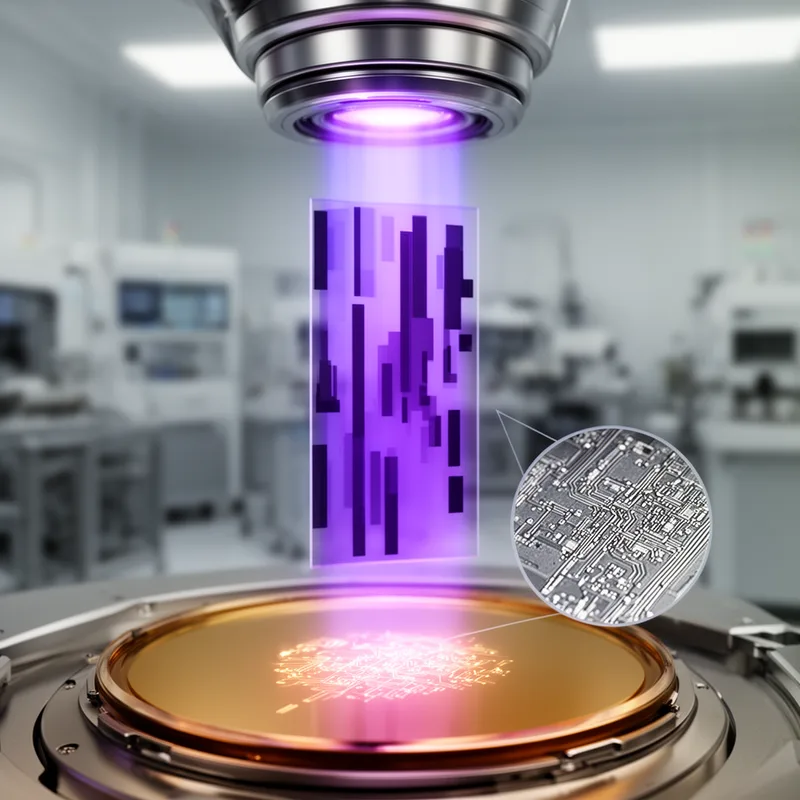
- Chipmakers use photolithography to etch electronic circuits into silicon wafers, and they are quickly approaching the physical limits of that technology.
- use photolithography
- photolithography to etch
Examples
-
The technician demonstrated how photolithography is used to develop microchips by applying light to a photoresist film.
-
Photolithography is a common method to fabricate high-efficiency IBC-SHJ solar cells.
Academic text (2018) -
His career in photolithography eventually led to electronic digital book publishing and digital color separation work.
Academic text (1998) -
However, photolithography has a large number of processing steps, which increase the overall cost of fabrication.
Academic text (2018) -
The patterns were increasingly produced by photolithography on a silicon dioxide surface layer grown on silicon.
Academic text (1993) -
Photolithography is the exposure of photosensitive resist to ultraviolet light to transfer an original image.
Academic text (1998) -
Thanks to advances in photolithography, which etches the pattern for the circuits with a focused beam of light, the computer industry has been able to match this progress for more than 40 years.
Academic text (2009) -
Commonly used techniques for via creation are laser ablation, reactive ion etching, and photolithography using a photosensitive polyimide.
Academic text (1998) -
Photolithography is essential in the semiconductor industry for creating intricate patterns on photolithography silicon wafers.
-
In modern manufacturing, photolithography allows for precise etching of circuits into silicon, critical for electronics.
Synonyms
 1
8.1
1
8.1
A process that uses light to put a tiny pattern on a computer chip
 1
7.7
1
7.7
A print made by a method that uses a flat stone or plate

The process of making printing plates using light and photo film

The process of making printing plates from photos to print images

A raised image used to make prints from a photograph
Making precise layouts on a surface, for example on computer chips
How Fine
- Specialized
1
9.9

- Specialized
1
8.1
31
1.0
- Specialized
Surface Forms
Morphology
photolithography = lithography (opaque) = photo + litho + graph + y
The word is formed by adding photo- to lithography, but the resulting technical meaning is not recoverable for an average B1 learner from the parts alone.
Etymology
Photolithography breaks into photo- 'light', litho- 'stone', and -graphy 'writing or drawing'. It originally meant 'printing from a stone using light', so today photolithography means using light and photographic images or masks to draw or print very small patterns, for example on microchips.