
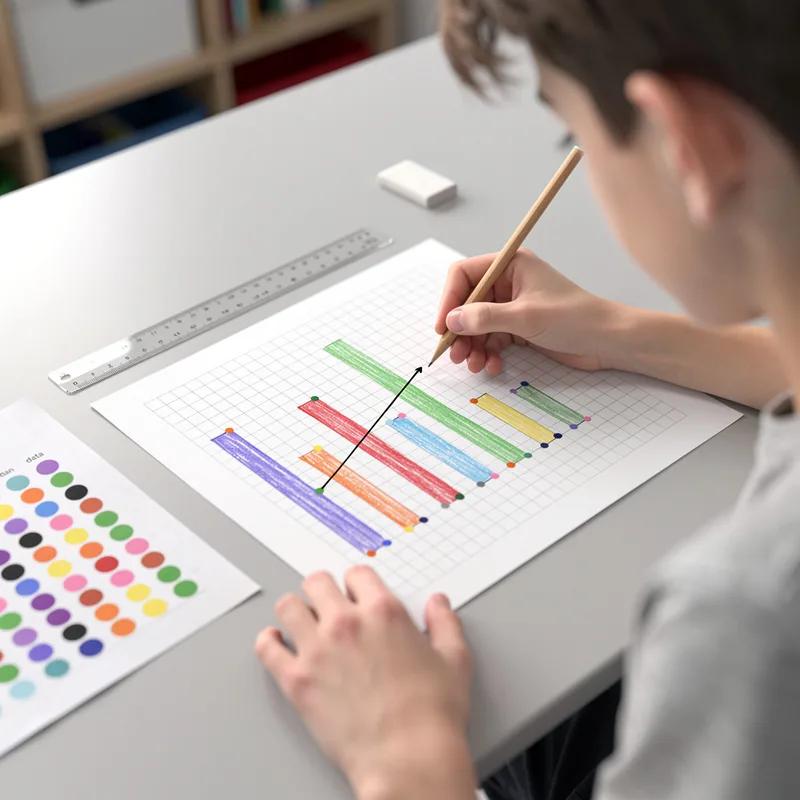
to graph
 6
3.2
6
3.2

- verb
- /ɡræf/
- The teacher showed us how to graph the changes in temperature over the week.
- graph data
- graph the results
- graph performance
Loading YouTube…
Watch on YouTubeIt actually graphs, he says, the thing in its fullness.
- It actually graphs, he says, the thing in its fullness.
- We have to, if we're going to graph it to success from destruction, we have to have destruction as a point on the graph.
Examples
-
But let's go ahead and graph a ellipse here.
-
The data points can then be graphed, and simple percentages can be reported to team members.
Academic text (2011) -
So now we're going to graph X -, y.
-
Number one, we graph the volume of traffic and the quality of vehicles in that parking lot.
-
Three: If you graph the numbers of any system, patterns emerge.
-
The students are provided with instruction on how to graph the information and make a visual analysis.
Academic text (2015) -
Why don't you try, and then look around and graph the results.
-
Students can learn notation by writing down or graphing the musical patterns they have created.
Academic text (1998) -
Software automatically graphs water level changes, and data can be downloaded into Excel or Lotus.
Academic text (1998) -
The enhanced Sensing Science Laboratory software package lets students analyze EasySense Loggers' graphed or tabled measurements.
Academic text (2001)
Synonyms
 79
3.5
79
3.5
To make a picture or table that shows information clearly

To put information into a graph to show links between things
Compounds


How Detailed
- Specialized
17
4.1
 6
3.2
6
3.2
- Specialized
33
6.7
762
2.3
158
1.3
Surface Forms
Etymology
Graph as a verb comes from the old Greek word graphein, which means 'to write' or 'to draw'. To graph data is to draw or plot numbers on paper or a screen, so the origin helps you remember the verb means 'to show data by drawing'.