

phantasmata
- noun
- /fænˈtæzməˌtɑ/
- Archaic
- She described the phantasmata that filled her visions, remnants of a restless night filled with fears and uncertainties.
Examples
-
Yet, both are fraught with danger due to the incessant attraction of phantasmata.
Academic text (2007) -
These examples suffice to illustrate the difficulty that phantasmata present for a Christian Platonist like Augustine.
Academic text (2007) -
Phantasmata are also at the root of idolatry.
Academic text (2007) -
Moreover, due to the Fall, the imagination is prone to be burdened by phantasmata that deflect its attention away from God.
Academic text (2007) -
Perhaps nowhere else in his works than in the Confessions is his anguish over the problem of phantasmata so palpably visible.
Academic text (2007) -
As second-order memory images voluntarily induced in the mind, phantasmata can impair the proper functioning of the intellect and hamper its efforts to find truth.
Academic text (2007) -
In the case of heretics, Augustine finds that not only do phantasmata account for the inability to comprehend the fundamental truth of Christianity, but also that they cause the inner and outer turbulence of the human spirit.
Academic text (2007) -
In this respect, the latest idolaters are worse than the pagans were because their hearts have now become the temples of phantasmata, the false gods of emptiness that conceal the only God who truly is "I am who am."
Academic text (2007) -
On more than one occasion, Augustine describes the futility of the struggle to climb the heights of contemplative awareness as long as hordes of phantasmata continue to afflict the mind's eye and the pull of evil habits continues to weaken the will.
Academic text (2007) -
In the midst of his troubled sleep, he was haunted by phantasmata that danced like shadows in his dreams.
Synonyms

 56
8.6
56
8.6

A ghost that people say appears and frightens them at night
 19
8.9
19
8.9
A ghost that people see suddenly
 4
9.9
4
9.9
A thing that seems real but is only in the mind, like a ghost


 1
9.9
1
9.9
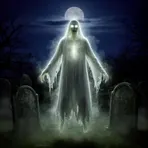
A ghost-like figure that seems real but is not
 1
9.9
1
9.9
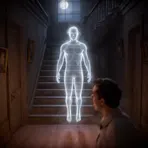
A frightening ghost that appears at night
 1
9.5
1
9.5
A spirit without a body that appears to people or stays near places
Antonyms


Surface Forms
Morphology
Etymology
The word phantasmata comes from the Greek word phantasma, which means 'appearance' or 'image', and it is the plural form of that word; think of the familiar English word phantom. So phantasmata are the ghostly 'appearances' or imagined figures you see in dreams or hallucinations.