
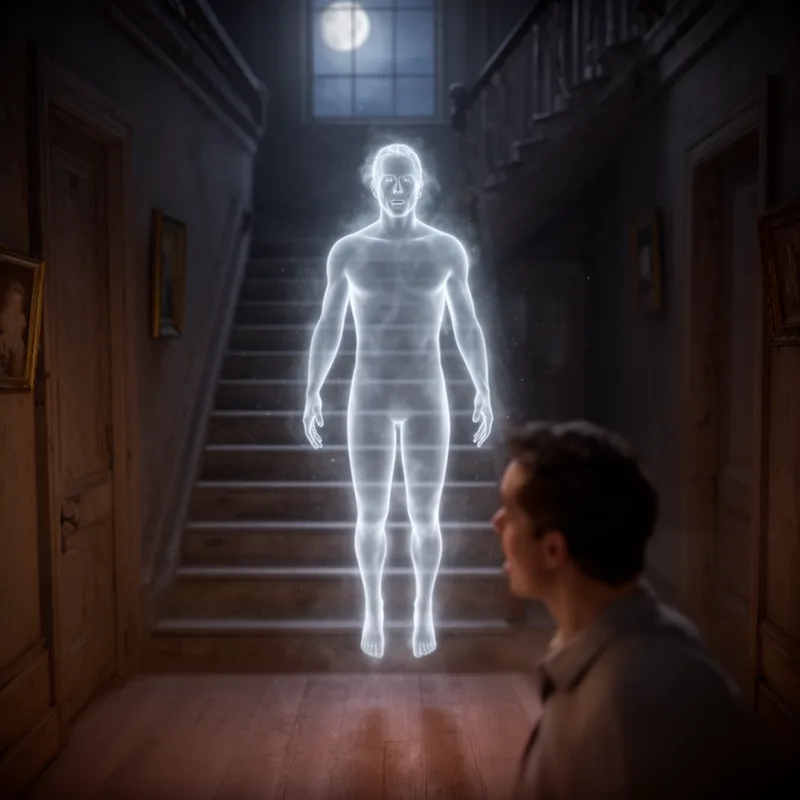
disembodied spirit


 1
9.5
1
9.5
- noun
- /ˌdɪsɪmˈbɒdid ˈspɪrɪt/
- Literature
- "Mother," he said, "I would not accept the testimony of Mrs. Blair as proof positive of the existence of disembodied spirits."
Loading YouTube…
Watch on YouTubeAnd I know now that disembodied spirits or voices can come through that thing.
- And I know now that disembodied spirits or voices can come through that thing.
Examples
-
And that these disembodied spirits tend to be hungry.
-
And I know now that disembodied spirits or voices can come through that thing.
-
The legend says that the disembodied spirit of the old woman wanders the halls of the mansion at night.
-
Many believe that a disembodied spirit can communicate with the living through dreams and visions.
-
He felt a chill in the room, as if a disembodied spirit was watching him from the shadows.
Synonyms
 929
3.0
929
3.0
The spirit of a dead person that people can see or feel
 527
7.0
527
7.0
A ghost or supernatural being that can appear to people
 116
9.9
116
9.9
A spirit or ghost that people feel is nearby
 81
6.7
81
6.7
A ghost or spirit that people think they see
 56
8.6
56
8.6
A ghost that people say appears and frightens them at night
 19
8.9
19
8.9
A ghost that people see suddenly
 11
4.7
11
4.7
A ghost believed to frighten people
 4
7.5
4
7.5
An invisible presence people believe can affect human life
 4
8.1
4
8.1
A being like a ghost or spirit that can affect people
 4
9.9
4
9.9
A thing that seems real but is only in the mind, like a ghost
 1
9.9
1
9.9
A ghost-like figure that seems real but is not
How Powerful
- Literature
1
8.1

- Literature
1
9.9
- Literature
- Literature
1
9.5
Surface Forms
Morphology
The compound meaning is directly built from 'disembodied' (not having a physical body) modifying 'spirit' (an incorporeal being), so the overall sense 'a spirit without a body' is transparent from the constituents. This adjective+noun composition is a regular, compositional pattern found across languages, so a B1 learner who knows both words should be able to infer the meaning.
Etymology
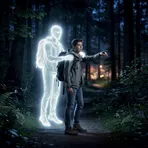
The noun disembodied spirit shows a clear picture: a spirit that is disembodied, meaning 'without a physical body', so it appears as a floating or unseen presence. That's why it means a being that exists without a body and can seem like a ghost to people.