

phanerogam
- noun
- /ˈfænəroʊˌɡæm/
- Specialized
- A phanerogam is any plant that produces seeds.
Examples
-
Flowering plants and conifers are typical examples of phanerogams.
-
Early botanists divided the plant kingdom into phanerogams and cryptogams.
-
The phanerogam group includes all plants that develop true seeds.
-
Many phanerogams are essential for ecosystems.
-
Flowering plants like roses and trees such as pines are categorized as phanerogams.
-
In botany, phanerogams are crucial because they represent all seed-producing plants.
-
Understanding phanerogams is important for studying plant reproduction and diversity.
Synonyms


 1
3.2
1
3.2
A plant that makes seeds to grow new plants
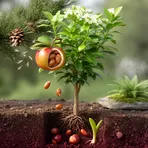
A plant that makes seeds to grow new plants, not spores

Plants that produce seeds, like flowering plants or conifers
Surface Forms
Morphology
phanerogam = phanero + gam
Formed from learned Greek combining forms (phanero- 'visible' + -gam relating to marriage/sexual reproduction); these are not productive standalone English words, so the meaning is not derivable by an average B1 learner from familiar English bases.
Etymology
The word phanerogam comes from Greek parts phanero- meaning 'visible' and -gam meaning 'marriage' or 'union', the same -gamy you see in monogamy. That's why phanerogams are plants that show their reproductive parts, like flowers or cones, and so make 'seeds' rather than spores.