
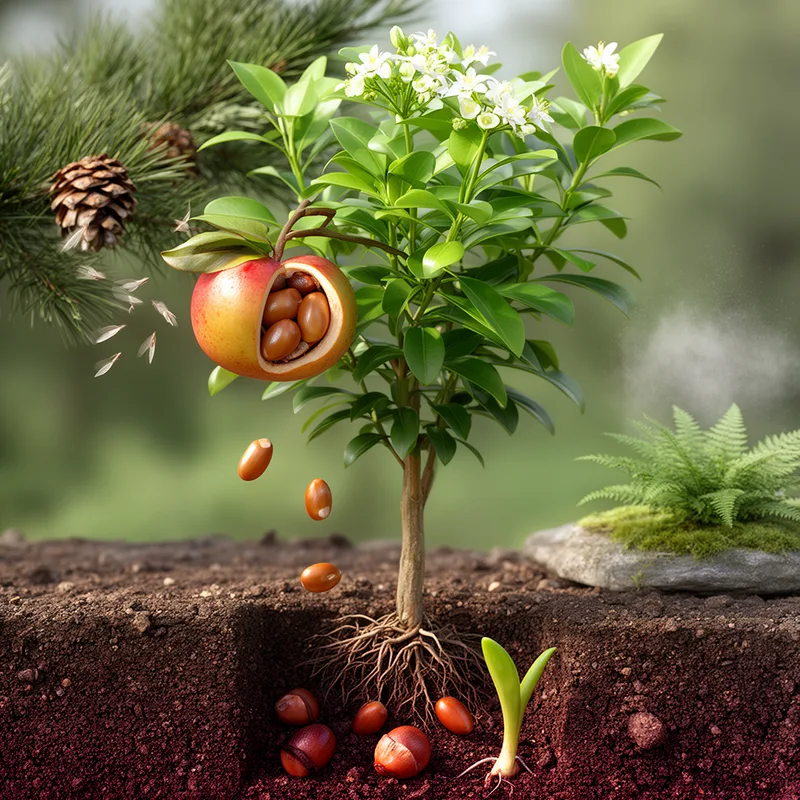
spermatophyte
- noun
- /ˌspɜrˈmætəˌfaɪt/
- Specialized
- Many species of spermatophytes, such as oak trees and sunflowers, rely on seeds for reproduction.
Examples
-
A spermatophyte produces seeds for reproduction.
-
Scientists classify flowering plants and conifers as spermatophyte groups.
-
Ferns and mosses are not spermatophytes because they reproduce by spores rather than seeds.
-
The appearance of spermatophytes marked a significant step in the evolution of land plants.
-
Many spermatophytes are found in temperate climates.
-
The study of spermatophytes helps scientists understand plant evolution and biodiversity.
-
In gardens, spermatophytes provide a variety of flowers and vegetables that grow from seeds.
Synonyms


 1
3.2
1
3.2
A plant that makes seeds to grow new plants
A plant that makes seeds instead of spores

An old name for the group of plants that have seeds
Surface Forms
Morphology
spermatophyte = sperm + phyte (opaque) = spermat + phyte
The components 'spermat' and 'phyte' are not standalone English words and require specialized knowledge of Greek-derived scientific terminology.
Etymology
Spermatophyte comes from Greek parts sperma 'seed' and phyte 'plant', so it literally means a 'seed plant' and that is why spermatophytes are plants that reproduce by seeds rather than spores.