
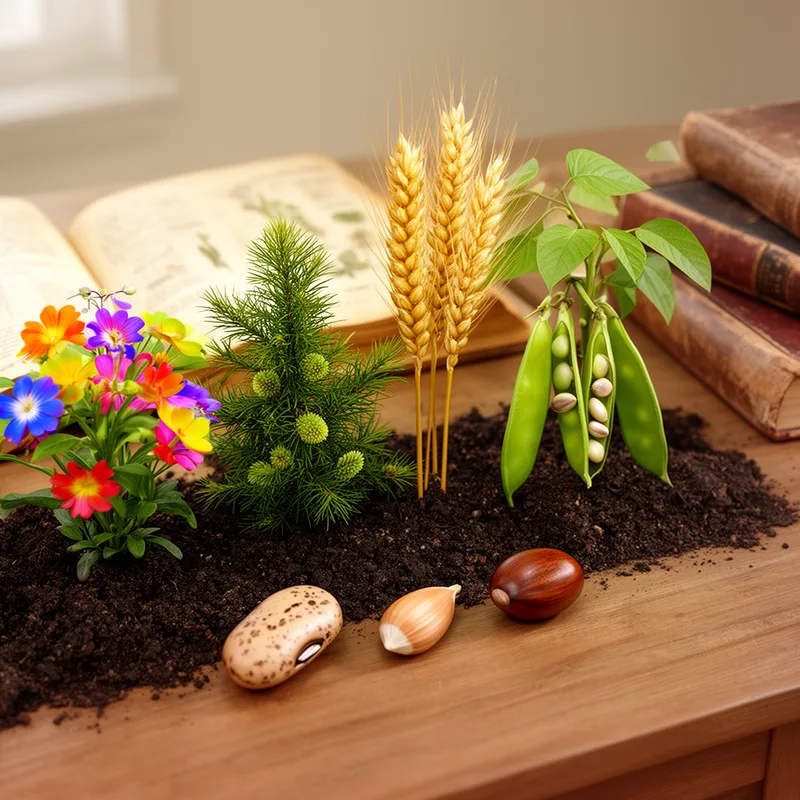
Phanerogamae
- noun
- /ˌfænəroʊˈɡeɪmi/
- Archaic
- Botanists now rarely use Phanerogamae, preferring the term Spermatophyta instead.
Examples
-
Many 19th-century texts refer to all seed-bearing plants as Phanerogamae.
-
The Phanerogamae classification is no longer widely used.
-
The system classified flowering plants under the group Phanerogamae.
-
Many biologists study Phanerogamae and their evolution.
-
In the past, textbooks often labeled flowering plants as Phanerogamae before the term became obsolete.
-
The outdated classification of plants included Phanerogamae, which encompassed all seed-bearing varieties.
-
Various scientists in earlier centuries categorized all seed plants under the name Phanerogamae.
Synonyms

Plants that produce seeds, like flowering plants or conifers
A plant that makes seeds instead of spores
A plant that makes seeds to grow new plants, not spores
Antonyms

- Archaic
A group of plants that do not make seeds, like ferns, mosses, algae and fungi
Surface Forms
Etymology
The word Phanerogamae comes from Greek parts phanero- meaning 'visible' and -gamae (from gamos) meaning 'marriage' or 'union'. In old plant systems it named plants whose parts that make seeds, like flowers, are easy to see, so it meant the group of seed-bearing or flowering plants.

