
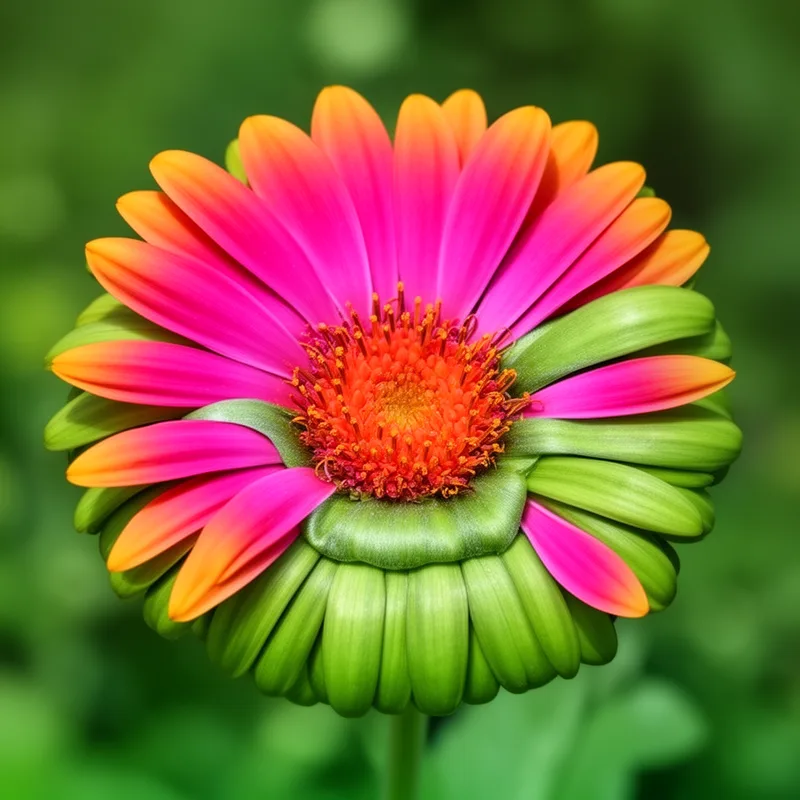
perigonium
- noun
- /ˌpɛrɪˈɡoʊniəm/
- Specialized
- The perigonium consists of both the sepals and petals of the flower.
Examples
-
The perigonium protects the reproductive organs of the flower.
-
In some plant species, the perigonium is brightly colored to attract pollinators.
-
Botanists examined the texture of the perigonium during their research.
-
Many plants have a colorful perigonium that attracts pollinators.
-
In some plant species, the perigonium is brightly colored to attract pollinators.
-
The perigonium consists of both the sepals and petals of the flower.
-
Botanists examined the texture of the perigonium during their research.
Synonyms
The outer parts of a flower, like sepals and petals, that protect its middle
The outer parts of a flower that surround its male and female parts

Outer parts of a flower, like small leaf parts and colorful petals, that surround its male and female parts

Outer part of a flower with petal-like parts that surround the center
Surface Forms
Morphology
perigonium = peri + gonium
The term is derived from Greek roots 'peri-' (around) and '-gonium' (related to reproductive organs), but the meaning is specialized and not easily deduced from the components.
Etymology
Perigonium comes from Greek parts peri- ('around') and -gonium (a part meaning 'angle' or 'corner'), like in the English words perimeter and polygon. So a perigonium is the outer part of a flower that 'goes around' its centre — the sepals and petals that enclose the stamens and pistils.

