

perigone
- noun
- /ˈpɛrɪˌgoʊn/
- Specialized
- The lily's perigone is made up of six petal-like segments that surround the reproductive organs.
Examples
-
Unlike many other flowers, the tulip has a brightly colored perigone instead of distinct petals and sepals.
-
Botanists often use the structure of the perigone to help identify species in certain plant families.
-
The perigone is beautiful.
-
What is a perigone?
-
Botanists often use the structure of the perigone to help identify species in certain plant families.
-
The lily's perigone is made up of six petal-like segments that surround the reproductive organs.
-
Unlike many other flowers, the tulip has a brightly colored perigone instead of distinct petals and sepals.
Synonyms
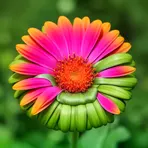
Outer parts of a flower that include the sepals and petals and surround the centre

The outer parts of a flower, like sepals and petals, that protect its middle
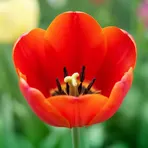
The outer parts of a flower that surround its male and female parts

Outer parts of a flower, like small leaf parts and colorful petals, that surround its male and female parts
Surface Forms
Morphology
perigone = perigon (opaque) = peri + gon
Although built from Greek combining elements (peri- + gon-), the term is a learned botanical loanword whose meaning is not inferable by an average B1 learner from 'peri-' alone.
Etymology
The word perigone comes from the Greek prefix peri- meaning 'around', like in perimeter. So a perigone is the ring of petal-like parts that 'go around' a flower, a handy name for when the sepals and petals look the same.

