
pathogenic
 5
7.0
5
7.0

- adjective
- /ˌpæθəˈdʒɛnɪk/
- Specialized
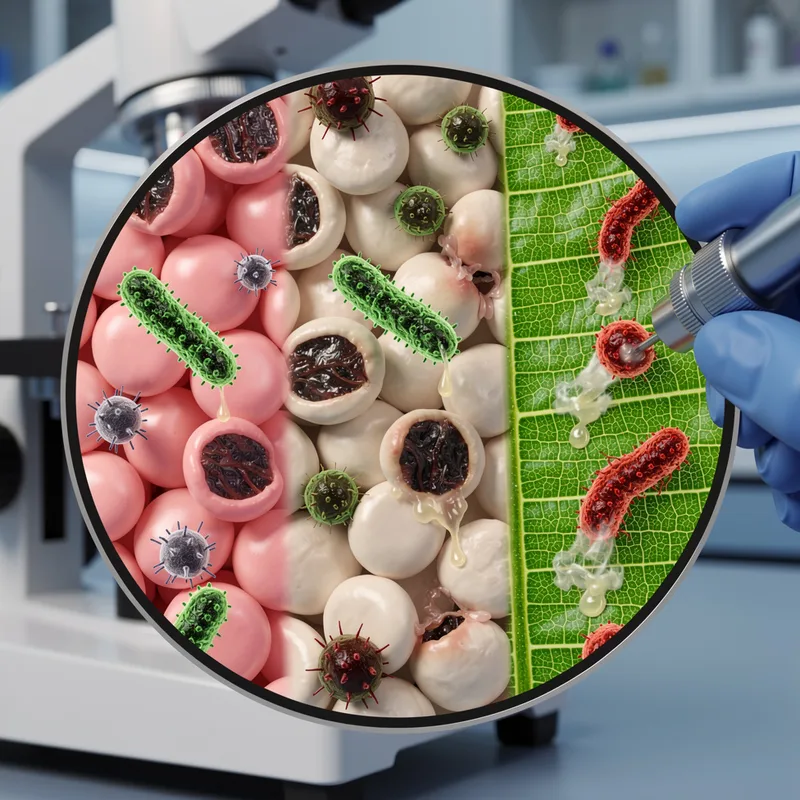
- In a laboratory, researchers studied various strains of pathogenic bacteria to understand their effects on health.
- pathogenic bacteria
- pathogenic organism
- highly pathogenic
Loading YouTube…
Watch on YouTubeSo you have data on variants which are pathogenic and variants which are benign.
- So you have data on variants which are pathogenic and variants which are benign.
- So it looks like that the more pathogenic the virus is, the less contagious it is.
- We do know that microplastics are fertile ground for pathogenic bacteria, which isn't exactly what you want to eat.
- If there was an evil source that wished to create a virus that was highly pathogenic in their garage, the technology does get easier.
- And it's he argued that reinfection plays an important pathogenic role in producing cavitary disease in endemic situations.
- It's a big potential mold, bacteria, pathogenic, impossible to clean.
- People don't want to be considered to be the focal point of those pathogenic epidemics.
- In fact, there's a great study done finding that honey inhibits pathogenic bacteria like staph infection, staph aureus, and E coli.
Examples
-
We do know that microplastics are fertile ground for pathogenic bacteria, which isn't exactly what you want to eat.
-
In fact, there's a great study done finding that honey inhibits pathogenic bacteria like staph infection, staph aureus, and E coli.
-
There may be pathogenic organisms inside.
-
Children in developing countries are exposed to an array of pathogenic organisms.
Academic text (2015) -
What if scientists wanted to make highly pathogenic viruses even more transmissible and dangerous?
-
Nevertheless, they argued that it is indeed pathogenic, based on their DNA-detection studies.
Academic text (2003) -
So bacterial infections can be caused by pathogenic gut bugs, things that we've heard of like salmonella, E coli or Shigella.
-
The doctor explained that pathogenic microorganisms are a major cause of infectious diseases.
-
Certain pathogenic viruses are responsible for outbreaks of disease in communities.
Synonyms
 76
3.9
76
3.9
A disease that can spread from one person to another
 14
9.1
14
9.1
Very harmful and able to cause disease that spreads quickly
 1
7.4
1
7.4
Able to make people sick and spread disease

Able to cause disease in people or animals

Very likely to make people sick

Likely to cause a serious illness that spreads quickly

Likely to spread disease

Likely to spread quickly and cause a disease outbreak
Antonyms

How Pathogenic

Surface Forms
Morphology
pathogenic = patho + gen + ic
The meaning is compositionally related to patho- 'disease' plus gen + -ic, but these are learned scientific forms rather than everyday English morphemes.
Etymology
Pathogenic comes from Greek parts path- meaning 'disease' and -genic meaning 'producing', the same idea you see in generate. So, pathogenic literally means 'producing disease', which is why we use it for microbes that cause illness.