

virulent
 14
9.1
14
9.1

- adjective
- /ˈvɪrələnt/
- Specialized
- The recent outbreak was attributed to a particularly virulent bacterium that spread rapidly through the population.
- virulent strain
- virulent subtype
- virulent pathogen
Loading YouTube…
Watch on YouTubeOK, particularly virulent cholera will kill you in a day or two.
- OK, particularly virulent cholera will kill you in a day or two.
- That's why in our world, infectious diseases tend to get less virulent over time and not more.
- So this new coronavirus strain is more virulent.
- For instance, the initial virus was much more virulent than the subsequent iterations of the virus.
- But I think it had to do with some sort of a virus and a group engineered a virus that was more virulent.
- These are all virulent strains that have at times infected us in the past, but they now loom in front of us again, all happening at once.
- We see a lot of variance now where people happen to get it and it's not as virulent as the the the initial wave that we were getting like Delta and things like that.
Examples
-
'Spanish flu', which struck in 1918, was a particularly virulent form of the disease.
Academic text (2012) -
For instance, the initial virus was much more virulent than the subsequent iterations of the virus.
-
This is a very virulent tumor.
-
Remember, the bug is virulent.
-
My boyfriend, Mark, was one of the first victims of the more virulent strain.
Fiction book (1997) -
OK, particularly virulent cholera will kill you in a day or two.
-
Rinderpest is incredibly virulent, with morbidity rates of nearly 100 percent among exposed animals.
Academic text (2013) -
The disease is caused by the highly virulent Phakopsora pachyrhizi fungus.
Academic text (2006) -
Disease reflects interactions among a susceptible host, a virulent pathogen, and environmental conditions that support the pathogen.
Academic text (2011) -
It can grow and reproduce inside the host cells and is one of the most virulent foodborne pathogens.
Synonyms
 543
2.8
543
2.8
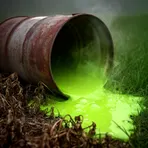
Able to cause death or serious harm
 380
4.0
380
4.0
Containing poison that can cause harm or death
 90
2.8
90
2.8
Containing a substance that can make you sick and can cause death if eaten, touched, or breathed
 40
5.6
40
5.6
A disease that spreads quickly and becomes more severe
 19
5.8
19
5.8
Spreading quickly into healthy tissue or nearby areas
 9
3.4
9
3.4
A disease that spreads very easily between people
 5
7.0
5
7.0
Able to cause disease in people, animals or plants
 1
7.4
1
7.4
Able to make people sick and spread disease


 1
8.1
1
8.1
Able to make poisons that can harm people or animals

Very likely to make people sick

Likely to cause a serious illness that spreads quickly

Likely to spread disease
Antonyms


Compounds

- Literature
A very strong angry reaction by many people against someone or something
How Harmful

Surface Forms
Morphology
virulent = virus (semi-transparent) = virul + ent
The adjective is historically related to 'virus' so the sense 'highly infectious/harmful' is somewhat guessable, but the specific suffixation and form are not fully transparent to average learners.
Etymology
Virulent comes from the Latin word virus, which meant 'poison'. Think of the modern word virus, which can be dangerous and spread fast; so virulent describes something very harmful or quick to cause disease.