
noninfectious


 1
4.6
1
4.6
- adjective
- /ˌnɒnɪnˈfɛkʃəs/
- Specialized
- Water-related diseases are either infectious (caused by pathogens) or noninfectious (caused by toxic chemicals) (Howard et al., 2003).
- noninfectious disease
- infectious or noninfectious
Examples
-
Assembly of the ISCOMs produces a viruslike structure that is noninfectious because it doesn't contain any viral genetic material.
Academic text (2005) -
Global health reflects the realities of globalization, including worldwide dissemination of infectious and noninfectious public health risks.
Academic text (2013) -
At the same time, noninfectious chronic disease rose, accounting for a greater share of overall mortality.
Academic text (2009) -
Andromeda's mutated to a noninfectious form.
-
Noninfectious etiologies, such as trauma and iatrogenic causes, are rare.
Academic text (2009) -
When a credible public health emergency arises, physicians unaccustomed to reporting noninfectious diseases might be asked for assistance to protect public health and safety.
Academic text (2013) -
These classifications facilitated an analysis of overall trends in deaths caused by infectious versus noninfectious diseases.
Academic text (2012) -
However, noninfectious environmental triggers, such as psychological stress or overfeeding during childhood, could also be implicated in the rise in type 1 diabetes.
Academic text (2012) -
AGE is caused by a variety of viral, bacterial, and parasitic pathogens and by toxins, chemicals, and other noninfectious causes.
Academic text (2013) -
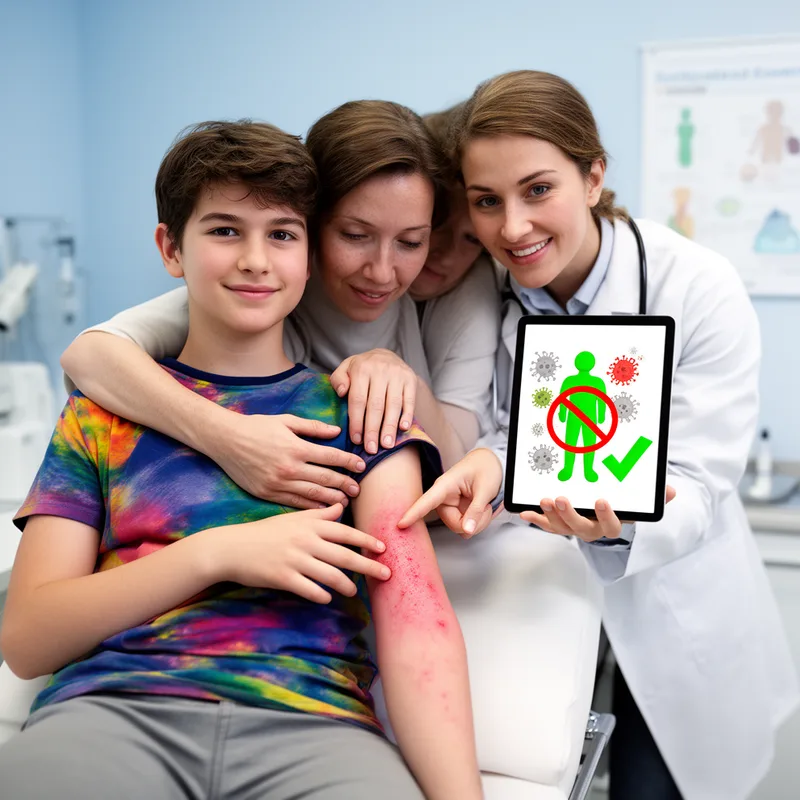
The doctor explained that her condition was noninfectious, so it wouldn't spread to others.
Synonyms
 1
4.4
1
4.4
Not able to spread from one person to another

Not able to make others sick or to spread a disease

A disease that cannot be passed from one person to another

Cannot be passed from one person to another

A wound or inflammation that is not caused by germs

Cannot cause disease in people or animals
Antonyms

How Infectious

Surface Forms
Morphology
noninfectious = infectious (transparent) = non + infect + ious
The negative prefix 'non-' is productively attached to the adjective 'infectious' to mean 'not infectious', a straightforward negation.
Etymology
The word noninfectious comes from the prefix non- meaning 'not' and the word infectious, which means 'able to spread infection'. So a noninfectious disease is one that does not spread from person to person.