
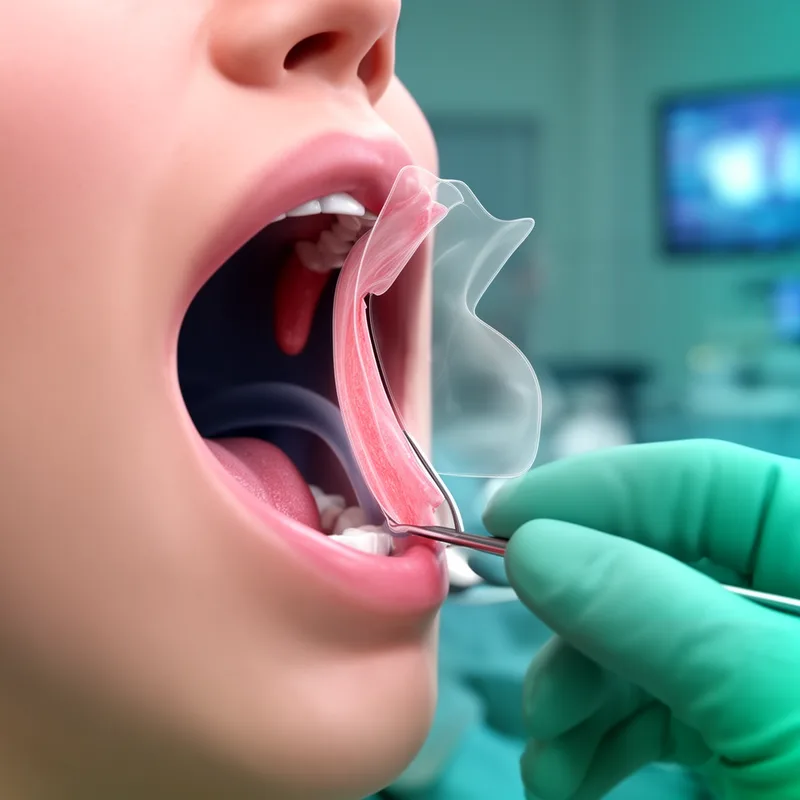
palatopharyngoplasty
- noun
- /ˌpælətəˌfɛrɪŋɡəˈplæsti/
- Specialized
- Referred to variously as palatopharyngoplasty, uvuloveloplasty, and uvulopalatoplasty, this operation was introduced to Western physicians some two decades ago.
Examples
-
The doctor explained that palatopharyngoplasty could help reduce his severe snoring by widening his airway.
-
After considering the options, she decided to undergo palatopharyngoplasty to alleviate her obstructive sleep apnea.
-
Many patients report improved sleep quality after having palatopharyngoplasty to remove excess tissue from the throat.
Synonyms



 1
8.9
Surgery to remove extra soft tissue from the back of the mouth to open the airway

An operation that removes part of the throat and soft palate to widen the airway and reduce snoring

A surgery to remove or change throat tissue to help breathing during sleep
How Invasive
- Specialized
19
4.0

- Specialized
- Specialized
- Specialized
7
3.6
Surface Forms
Morphology
palatopharyngoplasty = palato + pharyngo + plasty
This is a specialist medical term built from classical combining forms, so an average B1 learner would not be able to recover the meaning from the parts alone.
Etymology
Palatopharyngoplasty is made of three parts: palato- meaning 'roof of the mouth', pharyngo- meaning 'throat', and -plasty meaning 'to shape', the same idea as in plastic ('able to be shaped'). So, a palatopharyngoplasty is a surgery that 'shapes' the palate and throat to open the airway and help with severe snoring or sleep apnea.