
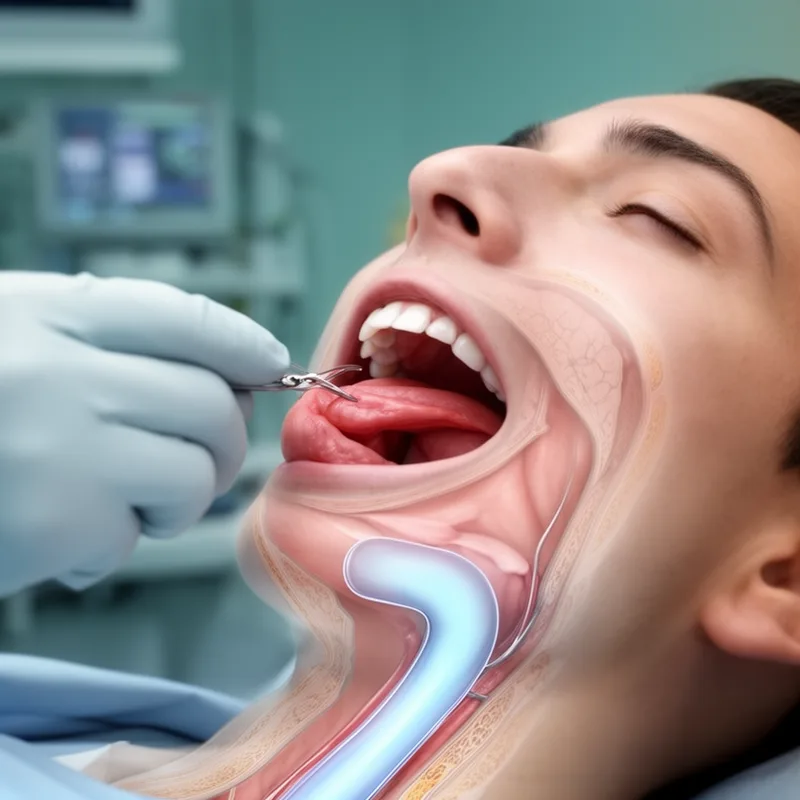
UPPP


 1
8.9
- noun
- Specialized
- After undergoing UPPP, many patients experienced a significant reduction in snoring.
- outpatient UPPP
- UPPP patients
- UPPP procedure
Examples
-
Early results indicated that UPPP was 75% to 100% effective in eliminating or significantly reducing snoring.
Academic text (1999) -
Clinical experience indicates that UPPP is often complicated by severe postoperative pain.
Academic text (1999) -
Limited procedures such as UPPP might be more successful in these patients.
Academic text (1999) -
Limited surgery, such as UPPP, is not likely to be successful when many abnormalities are present.
Academic text (1999) -
The limitations of UPPP created a demand for a more effective, safe, economical, and comfortable alternative.
Academic text (1999) -
There is little doubt that many UPPP patients do not obtain adequate relief from their snoring.
Academic text (1999) -
Overall, Hathaway and Johnson concluded that UPPP is safe as an outpatient procedure.
Academic text (2008) -
Our goal was to assess the safety of UPPP in the outpatient setting in patients without significant medical comorbidities.
Academic text (2008) -
In 2006, Hathaway and Johnson described their experience with outpatient UPPP in 110 patients.
Academic text (2008) -
Later, with more data, Fujita recommended UPPP to treat snoring in addition to OSAS.
Academic text (1999)
Synonyms

Surgery that removes extra tissue from the roof of the mouth and throat to open the airway and reduce snoring
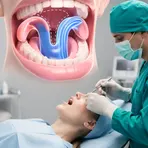
An operation that removes part of the throat and soft palate to widen the airway and reduce snoring
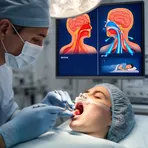
A surgery to remove or change throat tissue to help breathing during sleep
Surface Forms
Etymology
UPPP stands for the long surgical name uvulopalatopharyngoplasty, which names the parts treated: the uvula, the little flap at the back of the throat, the palate, the roof of the mouth, and pharyng meaning 'throat', plus -plasty meaning 'to shape or repair'. So UPPP is a surgery that removes or reshapes tissue in these areas to open the airway.