

oxidizing agent
- noun
- /ˈɑksɪˌdaɪzɪŋ ˈeɪdʒənt/
- Specialized
- Ozone is an extremely strong oxidizing agent.
Examples
-
He used an oxidizing agent and the the normal tissue was oxidized faster than the degenerating tissue.
-
Suitable for laboratory applications and potable water and wastewater industries, this unit can handle polymers, oxidizing agents, and corrosive chemicals.
Academic text (1996) -
Furthermore, cells were treated with an oxidizing agent, 1% periodic acid, for 5 minutes at room temperature and rinsed with distilled water for 5 to 10 minutes before treating with Schiff's reagent for 15 minutes at room temperature.
Academic text (2018) -
The peroxyl radical is an oxidizing agent akin to the type our cells generate day in and day out during ordinary metabolism, says Cao, who is a chemist and medical doctor.
Academic text (1996) -
Ozone is an important oxidizing agent because it can help purify water by killing bacteria.
-
Chlorine dioxide is a highly effective oxidizing agent commonly used in water treatment.
-
An oxidizing agent, like hydrogen peroxide, is essential in many chemical reactions to facilitate the loss of electrons.
Synonyms
 3
7.4
3
7.4

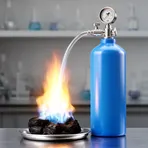
A chemical that helps something burn by giving oxygen
 1
7.0
1
7.0
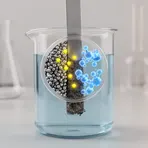
A chemical that takes electrons from another substance
Surface Forms
Morphology
The phrase is directly built from 'oxidize' (to cause oxidation) and 'agent' (a thing that causes an effect), so a learner who knows both words can infer it means a substance that causes oxidation. The precise electron-transfer definition is technical, but the basic compositional meaning is transparent and predictable to B1 learners.
Etymology
Oxidizing agent comes from a simple image: something that pulls tiny particles called 'electrons' away from another thing, where oxidizing is the pulling and agent is the one that does it. So an oxidizing agent 'takes electrons' or 'gives oxygen' to make the other thing change, which is why we call it that today.